In this post, Mike Morecroft, Deputy Director for Climate Change Science at Natural England, reflects on the Resilient Landscapes and Seas partnership symposium held recently in Edinburgh, where conservationists, scientists and land managers from across the UK and beyond came together to share experiences of landscape-scale nature recovery. From the role of science in planning for an uncertain climate future, to the growing potential of private finance, Mike explores what it takes to collaborate effectively, and why investing in relationships is just as important as investing in habitats.
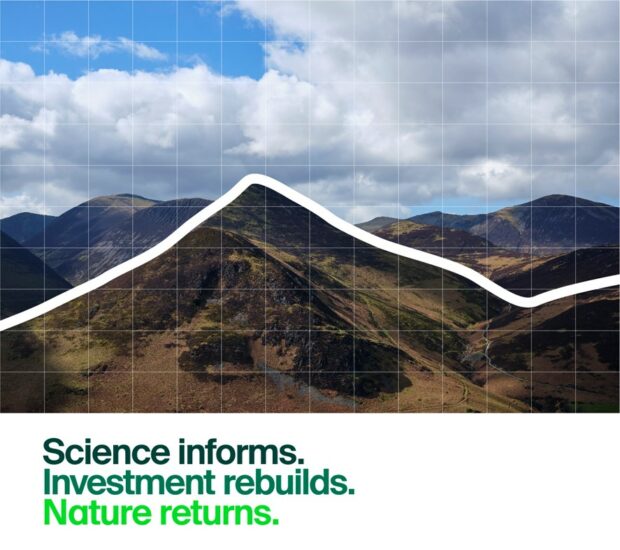
By Mike Morecroft, Deputy Director, Climate Change Science
Nature recovery and nature conservation work best at the large scale. Large areas support large populations of species which are more resilient to fluctuations caused by climate change and other shocks. Large areas also tend to be less vulnerable to pressures from surrounding land uses, such as reduced water supply and pollution.
The need to plan at landscape – and seascape – scale has become well recognised over recent decades; a key milestone was the Making Space for Nature review, chaired by Sir John Lawton and published in 2010 and it is a central element in our Natural England strategy. The larger the scale of working, the more important it becomes to work with other people.
Collaborating at scale for nature and people was the topic of a symposium organised by the newly formed Resilient Landscapes and Seas partnership (RLAS) (https://www.ecologicalcontinuitytrust.org/rlas-partnership) in Edinburgh 10-11 February 2026. Natural England was well-represented and I was delighted both to give a presentation and to learn what others are doing around the UK. Our chair, Tony Juniper, kicked off the conference, reviewing how we have progressed from site-based nature conservation in the 1970s to landscape-scale nature recovery today and looking ahead to the challenges and opportunities in the next 50 years.
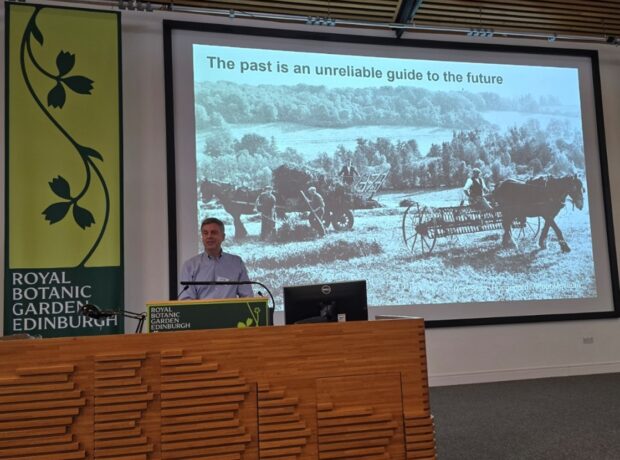
My focus was on climate change and how we need science to help us plan for an uncertain future, in which lessons from the past may be less relevant – although the value of practical experience should never be underestimated. Liz Humphreys spoke about the experiences of Natural England and partners in the EU LIFE WADER project, working for nature recovery in the catchment of the River Tweed down to the Northumbrian coast. Natural England was also represented in the poster session.
Collaboration is important at many levels. At the most basic level, a coordinated approach to land management across different land holdings is essential to deliver positive outcomes at the landscape scale. But it goes broader than that: my talk drew extensively on my experience leading the Nature Returns programme over the last 5 years, which has brought together scientists and land managers to learn from practical experience. Several Nature Returns colleagues from different organisations also presented their work at the RLAS symposium.
Good science allows us to rigorously test what works for nature recovery and to address new situations in an evidence-based way, but it needs to be grounded in the practicalities of land, water and sea management. In Nature Returns we have combined scientific measurements, for example of soil carbon and plant communities, with assessments of what helped or hindered habitat creation and the benefits for local people, including, jobs, volunteering and educational opportunities.
It is also important to learn from others working on similar projects in different places; this is one of the reasons for the creation of the RLAS partnership and it was good to compare notes with people working on nature recovery from Scotland, Wales, Ireland and the Netherlands. There are place-specific issues, but many common challenges.
A key role for Natural England is to be able to give advice to local projects, that helps them to benefit from experience elsewhere. Talking to people in Edinburgh, sharing experience was one of the key benefits of getting together. One message I took away was how much is happening, particularly on land but also extending into the coastal zone; another was the importance of investing in good relationships.
What constitutes landscape and seascape scale is not straightforward. One commonly used threshold, which has been adopted by the RLAS partnership is 500 hectares. That doesn’t necessarily mean changing the land use of the whole area. Within Nature Returns we’ve targeted habitat creation where it can have most impact for biodiversity and climate change, but also where it works practically for land managers and communities. Where projects focus on catchments and watercourses, there are often key places where intervention can bring big benefits downstream in terms of water quality or flood risk management.
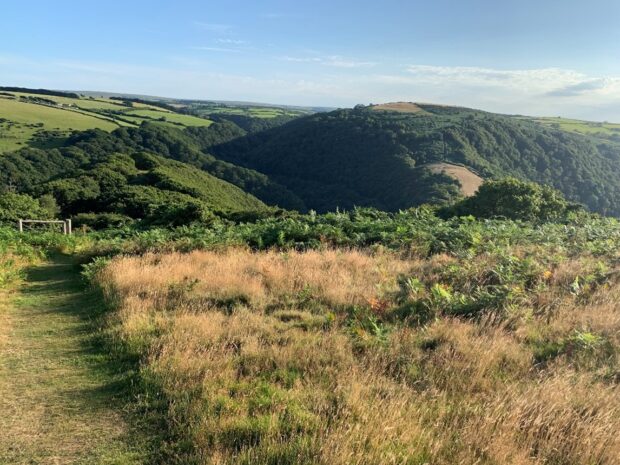
Working as scale requires funding: the RLAS symposium had a session on this and this is another part of Nature Return’s work. There is much interest in the possibilities of bringing in private finance alongside public funding. The sector has certainly grown over the last few years and there is a proliferation of different approaches, but there is still a long way to go if it is to make a major difference on the ground. This is another area where we need to try different things, see what works and what doesn’t and it was good to see just this happening across the sector.
One thing is clear: restoring nature at scale brings multiple benefits to biodiversity and people and in that sense is a great investment.
About the author:
Mike Morecroft is Deputy Director, Climate Change Science. He is an ecologist and has led the Nature Returns programme on Nature-based Solutions for climate change at the landscape scale for the last 5 years. He is also Natural England’s representative on the RLAS partnership steering group.
2 comments
Comment by Richard Watson posted on
And to those who say 'What about food production?', I say this:
Farming and nature are not in conflict, they depend upon each other. We need good quality, sustainably-produced food, but we also need the healthy natural ecosystems upon which farming relies. If the focus of farming is entirely upon production at the expense of nature, eventually the soil becomes degraded, yields fall, animals get sick and input costs erode profit margins. Low-input, nature friendly farming is the best way to ensure long-term food security.
Comment by Kamall Ramsahoye posted on
Good blog, definitely an intelligent approach to land management is needed!