By Mike Smith – Deputy Director, Wildlife Licensing and Reform
This blog outlines how Natural England is modernising the bat licensing system. It explores how we are building evidence to strengthen the planning system to deliver better outcomes for bat conservation, people and sustainable growth. It sets out our long-term vision for 2036, the practical reforms already underway, and the new evidence led tools we are testing to strengthen decision making.
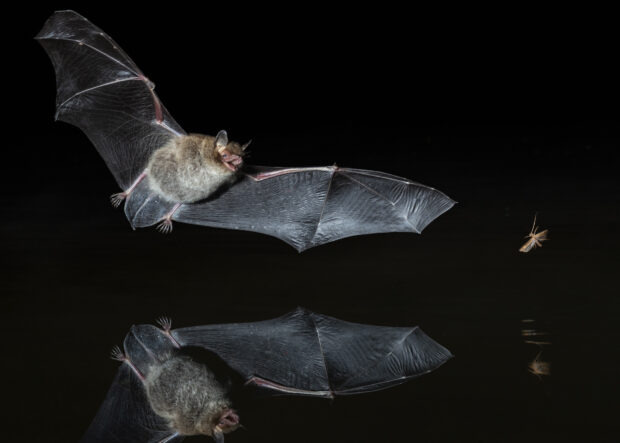
For many of us bats are glimpsed only in passing at dusk, yet behind these brief encounters lies an extraordinary species group. Bats account for roughly a quarter of all our mammal species in England and crucially where bats thrive nature thrives. Bats rely on a rich mix of habitats and their sensitivity to change makes them excellent indicators of whether our environment is healthy or not, offering early warning when the ecosystems we all rely on are under pressure.
However, bat populations have experienced long‑term pressures arising from habitat loss, fragmentation, changes in land management and the impacts of development. While conservation efforts have supported recovery for some species, sustained progress requires a more strategic and co‑ordinated approach. We want to see resilient bat populations thriving throughout England.
Natural England’s new Strategy signals a shift away from isolated interventions to nature recovery happening at a larger scale. It emphasises that we will achieve more by trusting others to deliver for nature and by placing greater focus on outcomes rather than processes. As part of our new strategy we are refocussing our approach to the planning and licensing systems to improve outcomes for nature and people and reduce administrative burdens. To support resilient bat populations we need to think at the scale of whole landscapes and focus our efforts to where they will have the greatest impact.
A vision for 2036
To help guide our work in the years ahead, we have worked with our partners to develop a vision for how bat populations can be supported by a planning and licensing system that also works more effectively for people:
By 2036 bat populations are thriving, supported by a society that recognises their value and embraces living alongside them as part of a healthy natural environment.
The planning and licensing systems work in a co-ordinated, efficient and outcome-focused way, delivering decisions that are predictable and proportionate. Strategic, landscape-scale planning provides long-term safeguards for bat populations.
A skilled workforce underpins the planning and licensing systems, and those who have demonstrated their competence operate with greater autonomy.
Monitoring and evaluation continually strengthen the evidence base, driving ongoing improvement and ensuring the systems remain effective.
Achieving this vision will take time and will require us to test innovative approaches, but we are already taking important steps to begin the journey.
Improving the planning and licensing systems
As part of our wider programme to modernise the licensing service and move towards this vision:
- We have started to expand and improve our trusted partner approach via our Bat Earned Recognition licensing scheme. A key part of this is streamlining the planning and licensing systems so that works approved through Bat Earned Recognition can begin sooner after planning permission is granted.
- We have introduced a new digital licence application process designed to cut administrative burden and enable faster decisions for customers.
- We will be exploring whether more flexible survey requirements can be used in a licensing system that still deliver the right outcomes for bats, ensuring protection while reducing unnecessary burden.
- We will place greater emphasis on the effectiveness of compensation measures, identifying which actions genuinely deliver benefits and will explore alternative approaches, including the effectiveness of off-site compensation.
- We will improve our customer‑facing guidance on gov.uk as part of our response to the Corry Review.
While some of these actions are already underway, we will launch others and explore new approaches in specific locations over the coming year. If these new measures are shown to be effective, they could not only lead to better outcomes for bat populations but also create greater flexibility and reduce delays, costs and uncertainty for customers navigating the planning and licensing process.
Strengthening the evidence base
Understanding how bats use the landscape is fundamental to effective conservation. Individual roosts are important but bats don’t stay in one place. They move around the landscape between their roosts, feeding areas and along the routes they use to travel. Understanding these patterns is essential for effective conservation because it’s this wider network of habitats that keep bat populations healthy and resilient.
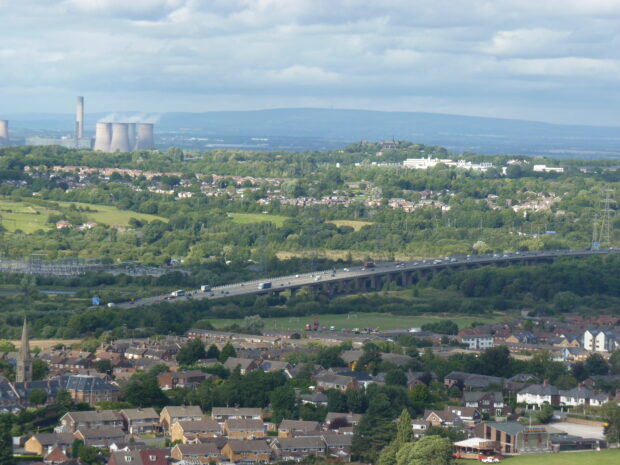
Natural England is testing new mapping and modelling tools to show where bats feed and move across the landscape. These tools could help highlight the most important areas for bats, assess the combined impact of different pressures, target conservation work more effectively and support better strategic planning. By building consistent, high‑quality evidence into the system, decisions can be made earlier and with greater clarity and confidence.
All these reforms will be supported by strong monitoring and evaluation, ensuring we keep improving the evidence base and continue to refine the regulatory system over time.
Working in partnership
We will work closely with ecological professionals, planning authorities, developers, conservation groups and local communities to refine and implement reforms to the system in the coming years. The expertise and experience of our partners is vital to ensuring reforms are practical, effective and delivers better outcomes for bat conservation and for nature recovery.
You can read more about our new Strategy on gov.uk which sets out how we are reforming our regulatory functions to recover nature at scale, unlock sustainable growth and to deliver long-term public sector savings.
6 comments
Comment by Annoyed Ecologist posted on
You talk about individual roosts, but what about maternity roosts that are used year in year out?
so you really expect developers to care about bats?
the earned recognition scheme will lose lots and lots of experienced ecologists who don't want to do all your long winded paperwork and red tape.
When are you going to change your name from Natural England to Developed England?
Comment by Natural England posted on
Thank you for your comment. Natural England’s overarching priority is nature recovery and that includes securing long-term improvements for bat populations. Maternity roosts and other sensitive sites remain a key focus in our work and any changes to planning or licensing must deliver better outcomes for bats, not weaken protection.
Our aim is to improve the systems to deliver measurable gains for bat species conservation so that solutions genuinely support thriving bat populations. Experienced ecologists will continue to play an essential role in achieving this, and we are committed to working with the sector to ensure approaches are proportionate and focus on meaningful ecological outcomes. We are focussed on a system that delivers genuinely better results for wildlife, places and people.
Comment by GRAHAM DAVISON posted on
As an ecological consultant who has been obtaining bat mitigation licences for over 20 years I have to flag up the decision to withdraw the BMCL system (WML CL21) as an absolute stinker.
WML CL21 has been the most user-friendly, fast and cost-efficient licensing system in the licensing armoury. Ever. 'Traditional' licenses were long-winded and data-heavy, but they were at least efficient before Natural England started charging for them (after which they seemed to perversely get slower).
The BMCL licence was a revelation in that it was very fast to complete for the consultant, fast to register by Natural England, free for many clients and cheap (£135) for the rest. It isn't perfect and can easily be improved further to reflect last minute discoveries in particular.
By contrast ER is an absolute shambles. It isn't 'open to all' because of a lack of resource to assess applications; unfair and unhelpful - I have missed out on at least a couple of ER intakes. Additionally, the application process is hideously onerous and long-winded (I have been advised by a hugely-experienced Bat Survey Licence Level 4 colleague).
To make matters worse, I have seen the ER site registration forms and they are not much better than a 'traditional' licence in terms of data input (which surely defeats the whole point of the Earned Recognition system). They are nowhere near as quick and efficient as the BMCL form which can be knocked out in under an hour and they cost the client nearly 4 times as much as a BMCL for those licences that are not exempt from charges.
Why not just keep and improve WML CL21 for those 80%+ of licensing situations that it covers and let ER and traditional licenses take the strain for the rest? (if we must).
My burning question is whether any of the people who are pushing for the 'smarter', 'coordinated' and 'efficient' licensing systems have ever actually completed any of the various different licences on offer (FIR?!). If not, I recommend that they should because the implications of ditching BMCL will be manifestly obvious. Bad for consultants (slow), bad for clients (slower and more expensive), bad for licensing officers (must be slower to assess), same outcome for bats (although worse public perception due to increased costs and slower timescales compared to BMCL).
Comment by Natural England posted on
Bat Earned Recognition (ER) builds on the principles of the BMCL and has been developed to improve bat mitigation licensing, with three key aims: to streamline the licensing process, maintain and improve mitigation standards, and deliver better conservation outcomes for bats.
Following careful consideration, Natural England concluded that BMCL is no longer able to meet its strategic objectives for driving nature recovery. All BMCL-registered consultants are therefore being offered the opportunity to transfer to Bat ER, which is comparable to BMCL but provides additional benefits.
Bat ER has been thoroughly tested and opened to new applications earlier this year on a permanent basis, with no limits on consultant numbers. In response to sector feedback, the entry accreditation requirements have been substantially streamlined and are now more accessible than during the testing phases.
The Bat ER site registration process is broadly based on BMCL but has been improved and is now faster, with further enhancements planned. We may ask for more data in some instances under Bat ER but this has been carefully balanced to help build an environmental data set that can be used for research and ensuring better outcomes for bat conservation. We are continuing to expand and improve Bat Earned Recognition as part of modernising our licensing service to ensure it delivers the right outcomes for bats and for customers.
Thank you again for taking the time to provide your feedback.
Comment by Andrew posted on
Natural England should be ashamed for proposing this anti wildlife approach. Natural England are just an enabler for the government and big developers now to kill bats and other wildlife for money. Reducing survey effort is a disaster in the making and will mean bats and their roosts being killed and destroyed. This proposal is not in the interest of bat conservation and it will also break EU Law. Having talked to developers who do not want this approach, it is clear that any developer found to kill bats under a licence to kill will tarnish and destroy their reputation and branding in the long term
Comment by Natural England posted on
Thank you for your comment. Delivering measurable gains to bat species conservation is a core aim of this work.
Currently surveys are sometimes undertaken which do not provide additional information or change the overall outcomes for bats. We are exploring more flexibility to ensure proportionate levels of survey are undertake and that survey effort is focused to where it genuinely benefits conservation.
Natural England is not proposing licences that permit the killing of bats via these changes. Where impacts are unavoidable mitigation to protect individual bats during works will remain important, alongside compensation to ensure continued habitat provision.