By Anna Oliveri, Senior Landscape Officer, Natural England
Abbotts Hall Farm on the Essex coast is quietly becoming one of England's most compelling examples of landscape-scale nature recovery in action. In this post, Senior Landscape Officer Anna Oliveri shares insights from a conversation with Essex Wildlife Trust, exploring how the site is being transformed into a publicly accessible nature reserve through partnership working, blended green finance, and a commitment to working with - rather than against - the natural landscape.
From managed coastal realignment and habitat banking to millennia of hidden heritage and new walking routes along the King Charles III England Coast Path, Abbotts Hall shows how Natural England's strategy, 'Nature for Growth, Health and Security', can be brought to life in a way that benefits wildlife, communities and the economy alike.
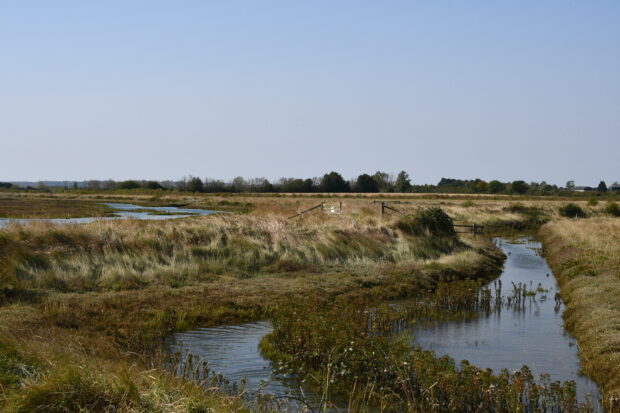
When I first arrived at Abbotts Hall, walking past the old farmhouse toward the saltmarsh creeks, I felt I’d stepped into a place that was both unassuming and quietly revolutionary. Mudflats shift with the tide, Marsh Harriers call across vast estuary skies, and coastal breezes ripple through the grasslands of a former arable farm. Yet this unhurried landscape epitomises Natural England’s new strategy, ‘Nature for Growth, Health and Security’ by restoring ecosystems at scale and showing how nature can thrive alongside people and the economy.
In this article, I share key insights from the Abbotts Hall project based on our podcast conversation with Essex Wildlife Trust, who outline their ambitious plans to transform the site into a publicly accessible nature reserve funded through innovative green finance. The project will help reconnect landscapes across the Blackwater and Colne Estuaries and create new opportunities for people to explore the Essex coast along the King Charles III Coast Path.
Partnership working is key to nature recovery at scale
The Essex coastline forms part of a nationally and internationally significant network of wetlands, estuaries and nature-rich habitats. In our podcast, Dr Jeremy (Jez) Dagley, Director of Conservation at Essex Wildlife Trust, explains how Abbotts Hall is deliberately being designed as a hub for wider ecological connectivity rather than a standalone reserve, supporting a growing network for nature recovery. This means linking saltmarsh, grazing marsh, estuary and farmland habitats, particularly important for birds, across the surrounding area.
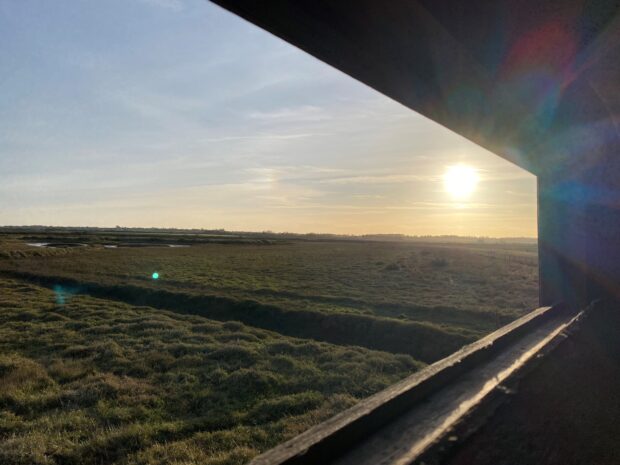
Essex Wildlife Trust is actively coordinating with neighbouring sites, landowners and farmers as part of a wider partnership to ensure the coast functions as a connected system that contributes towards delivering the Essex Local Nature Recovery Strategy (LNRS). Jez reflects that this shift toward collaboration led by partnerships, rather than individual organisations, is essential for scaling up work from isolated interventions to impactful, landscape-scale recovery that create more, bigger, better and joined up wildlife-rich places.
Blended finance can support long-term nature recovery
The Trust is weaving together public funding, private investment, habitat banking and Biodiversity Net Gain (BNG) units to support long-term restoration at Abbotts Hall. Our conversation explores how this “blended finance” approach enables the team to diversify income, reduce vulnerability to short-term funding cycles and ensure the reserve can be managed sustainably.
Creating a registered habitat bank supplying BNG units forms a key part of this strategy. Importantly, Essex Wildlife Trust has taken a “nature first” approach: habitat choices are driven by ecological integrity rather than profitability, demonstrating how market mechanisms can be used responsibly when guided by evidence and nature’s needs.
Work with the grain of the landscape and seascape
One theme underpins everything happening at Abbotts Hall: let nature lead. The 2002 managed coastal realignment marked a pivotal moment. Instead of rebuilding coastal defences in the face of flood risk, the Trust sought to adapt to the natural forces and, guided by the expertise of the Environment Agency, embraced this profound change.
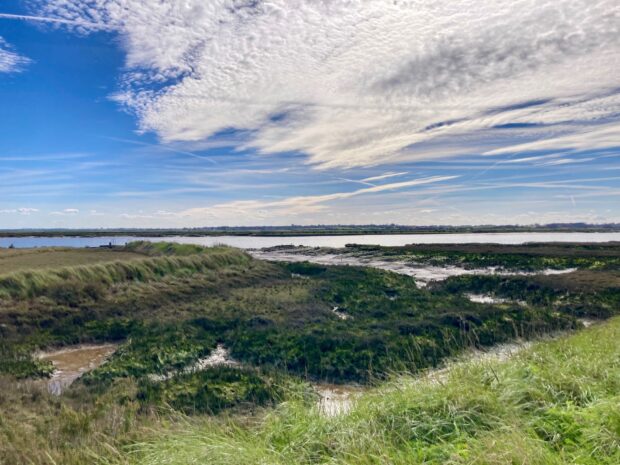
The decision to breach the sea wall shaped the journey of Abbotts Hall. In adapting in this way, Abbotts Hall’s influence on the landscape and seascape went well beyond its own boundaries. The changes made here still influence the tidal ebb and flow, waterfowl from around the Blackwater now seek out this new estuarine space to roost, and fish spawn here, repopulating the wider marine environment. Saltmarsh and mudflats continue to re-establish and evolve, while the Trust’s restoration plan inland uses the natural landform to create a rare natural, transition from saltmarsh to scrub mosaic, through species‑rich grassland to woodland.
Grazing will become a central management tool here, continuing centuries of coastal grazing land management, essential in encouraging dynamism amongst the mosaic of habitats that make this stretch of coast so ecologically rich.
Recovering nature while respecting historic landscape character
Nature recovery doesn’t mean turning back the clock. It means allowing landscapes to evolve and function. In turn, this helps to address biodiversity loss, climate change and improve access to nature, while respecting the cultural and historic features that makes landscapes meaningful and provide a rooted sense of place.
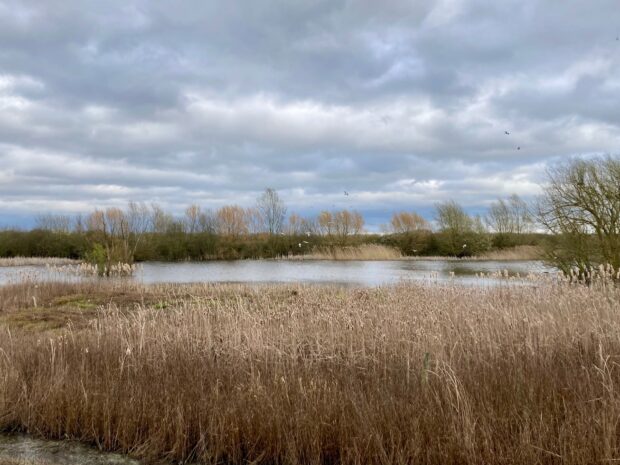
As the podcast guides us though the site, we learn that visitors can ‘time travel’, walking through a thousand years of human occupation in a single morning, if they know where to look: red hills from ancient salt-making, pre-medieval field boundaries, historic driveways, even prehistoric flints have been uncovered in the marsh.
Our conversations highlight how a strong understanding of place helps shape decisions about protecting and managing these historic landscape features while restoring natural transitions between habitats and preparing adaptations for profound changes to come. The new emerging landscape will retain its cultural roots but function more naturally as an ecological system, exemplifying Natural England’s Strategy commitment to recovery grounded in local context.
Creating new access for people
A 2.6 km section of the King Charles III England Coast Path will pass through the site, and that’s not all, as Essex Wildlife Trust are working on opening up Abbotts Hall. There will be 9 km of walking routes that will provide new access to a wilder and previously inaccessible landscape, enabling more people to enjoy the health and wellbeing benefits of time spent in nature.
From strategy to action
At Abbotts Hall, landscape-scale nature recovery, green finance, heritage, access, climate resilience and partnership come together in one place, demonstrating how Natural England’s strategy can work when applied with vision, collaboration and long‑term funding. It offers a glimpse of a future where nature is richer, wilder and more connected and where people and wildlife thrive together.
That is the future the Strategy envisions. Abbotts Hall is a fantastic example of how we get there. And it shows why recovering nature is not only achievable but also necessary for our long-term growth health and security.
Catch the full conversation on Natural England’s YouTube channel, along with more episodes of The Landscape Podcast, and look out for updates over on the Essex Wildlife Trust website.
Recent Comments