By Jeremy Sabel and Matt Heydon Natural England’s Species Recovery & Reintroductions Team
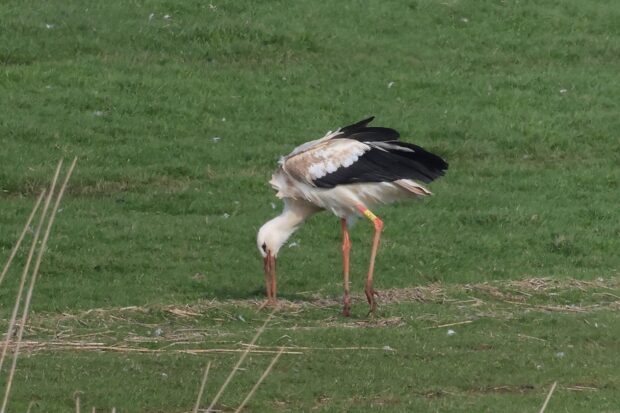
Projects involving the release of white stork Ciconia ciconia capture the public imagination. If fairy tales are to be believed, white storks bring good luck and deliver babies.
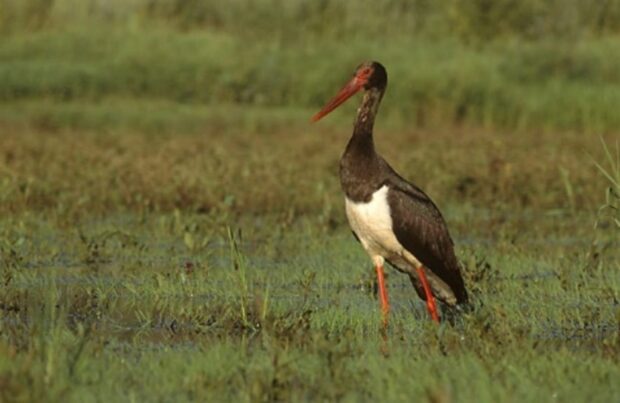
In England, we have an establishing population of white stork at Knepp in West Sussex and other projects actively releasing or planning releases of white storks and black storks Ciconia negra. However, these projects confront us with some challenging questions. Are releases legal? Is there any evidence either of these species were ever native breeding birds? Should we be releasing white stork, black stork and other bird species into the wild in England?
This blog sets out Natural England’s current thinking on this topic.
The legal baseline
The law includes provisions to prevent the release into the wild of certain plants and animals which may cause ecological, environmental, or socio-economic harm. To achieve this, the Wildlife and Countryside Act 1981 prohibits the introduction into the wild of any animal that ‘is of a kind which is not ordinarily resident in and is not a regular visitor to Great Britain in a wild state’ or ‘is included in Part I of Schedule 9’. We explain our interpretations of ‘ordinarily resident’ and ‘regular visitor’ later in this blog.
White stork is a regular visitor with an establishing population due to releases. It is not listed on Schedule 9 so no licence is currently required to release white stork in England.
Natural England considers that black stork is neither ordinarily resident in, nor a regular visitor to Britain in a wild state. This means that a licence is required to release black stork in England.
Are these birds native? What does the evidence tell us?
There is no definition of native species in English law, but Natural England published the definition that it uses in a previous blog. There is one breeding record of white stork in Britain, from Scotland in 1416. Prior to recent releases there were no English breeding records of white stork and none of black stork. Both species are rare in archaeological finds, and at Mediaeval sites there is just one record of white stork despite numerous other wild bird species’ remains. There are records of imports of ‘storks’ from Calais in the 16th Century. There is very little evidence of there ever being a sustained presence of white stork or black stork as English breeding species or as regular migrants. By our definition, neither stork species was ever a native breeding bird.
What does best practice guidance tell us?
All species introductions or conservation translocations should follow the Reintroductions and Conservation Translocations Code for England. This requires among other things:
- A clear conservation need
- A detailed feasibility study
- Robust risk assessment, including appropriate sourcing, welfare and biosecurity measures
- Engagement with stakeholders, experts and the public
- Maximising long-term success through adaptive management and monitoring
- A viable exit strategy if a self-sustaining population cannot be achieved
Should we introduce white or black stork?
Natural England recognises the value of white stork as a visible and charismatic species in engaging people with nature but releases of this species are not a priority for us.
The white stork is a generalist predator of a variety of species including invertebrates, small mammals, amphibians, reptiles and fish. Any project should consider both the impact of introducing this new predator on other species at the proposed release location, and the ability of the habitat to support the needs of the released storks in the long-term.
Any releases of white storks on a protected site will likely require consent from Natural England to ensure features of the site will not be negatively impacted.
In the absence of evidence that black stork is a native species, there is a presumption against granting any licence to introduce this species.
What about other bird species?
The release of any species that is neither ‘ordinarily resident’ nor a ‘regular visitor’ will require a licence from Natural England.
Natural England interprets the legal terms ‘ordinarily resident’ and ‘regular visitor’ as the predictable presence of breeding, non-breeding and passage populations (not just individuals), within the species’ occupied range. This interpretation excludes species whose presence cannot be predicted at any given time or location. These species are considered as vagrants and/or scarce migrants, and their release is prohibited in England except under a licence issued by Natural England.
Natural England remains open to considering new evidence as to the status of any species including changes resulting from climate change or other factors.
Further advice
Anyone considering introducing any species should submit a conservation translocation scoping form. Advice is available from Natural England speciesrecoveryreintroduction@naturalengland.org.uk.
5 comments
Comment by Richard Watson posted on
I think the fact that storks feature so strongly in folklore is significant. There is a clearly a strong folk memory of these birds which must have come from somewhere. With regard to their predatory habits, my comment would be that this does not seem to have affected the richness and abundance of wildlife at Knepp. Predators are part of a healthy ecosystem. If farming practices are in harmony with nature, then predators can serve a useful purpose in maintaining the balance. That goes for sea eagles, golden eagles and lynx too.
Comment by John Nicholas Dixon posted on
Knepp is not England: effects on local wildlife (just how is that being monitored?) are not necessarily representative of what could happen across the country.
Also, folklore is not history and given Britain's long history of colonisation from the continent of Europe as well as cultural exchange by clerics, mercenaries and others, migration of folklore is much more likely than of species. If we must mention folklore in relation to White Storks then perhaps the fable of Old King Log and Young King Stork is a cautionary tale.
The real fairytale in the Knepp story is that White Stork is other than a scarce visitor to Britain during migration periods - like the American Pectoral Sandpiper, Southern European Woodchat Shrike or Far Eastern Pallas's Leaf Warbler.
Comment by NEIL JOHN BUCKNELL posted on
Two comments here. Firstly, on the folklore point, don't forget that we share a lot of folklore with neighbouring European countries, from where many of our ancestors came in many waves since the last ice age until the present day, and whose authors, poets and composers contributed to a considerable body of common trans-European culture.
Secondly, I can recall when I started birdwatching as a teenager in the 1970s, White Stork was a declining bird, not encountered closer to the UK than a small population clinging on on the west coast of France or another in Baltic areas of West Germany and Denmark. As a result of conservation measures, a taste for feeding on open landfill sites and other factors, its range has expanded and (as reported in the second European Bird Atlas) it is estimated that numbers have increased by 46% between 1980 and 2016. It is not a species that currently seems to merit being a focus of conservation action in the UK, and on current trends looks as if it might well have followed the three Egret species and Spoonbills in (re?) colonising Great Britain without targeted action. Let's put resources into species such as Turtle Dove, Lapwing, Curlew where the trends are alarming and the solutions still require more resources for research before implementation.
Comment by Tony Bridges posted on
I think we should worry more about the damage to native wildlife done by the massive releases of pheasants. There would need to be huge numbers of Storks to equal just a small percentage of damage done by those releases every year.
Comment by Richard Watson posted on
Maybe we should be controlling the annual release of millions of non-native 'game' birds into our countryside before we get exercised about the release of a few storks.