By Angela Gall - Marine Senior Officer, Devon, Cornwall and Isles of Scilly Area Team
Off the south coast of Cornwall, in the cold, clear water, lie some of England's least-known natural treasures: the maerl beds. Earlier this summer, our dive team's work there caught the attention of the BBC, who came to film one of the most significant discoveries our surveys have produced, a species of seaweed new to science, alongside several other rare and long-absent finds. This blog looks at what was found, why these ancient, fragile beds matter, and what the work to understand and protect them means for the future.
In the cold, clear water off the south coast of Cornwall lies one of England's most extraordinary and least-known natural treasures: Maerl beds. The pink, branching rhodoliths - free-living, calcified red seaweed - lie loose across the sediment in interlocking drifts, building up over centuries into structures that support an astonishing wealth of marine life.
Earlier this summer, the BBC came to film our dive team at work on these remarkable habitats to break the news about one of the most exciting scientific discoveries our surveys have ever produced.
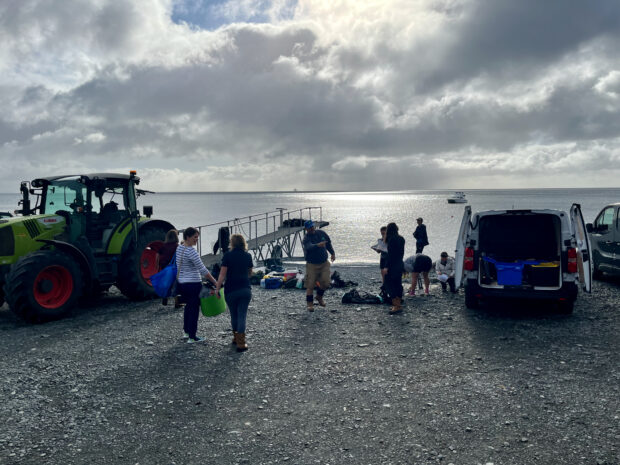
A species new to science, found right on our doorstep
Our underwater surveys here have uncovered something very special: a tiny red seaweed, a species of Ceramium (pincer weed), that is completely new to science. Just a few millimetres across, its tiny size means it has never been formally identified until now. It took our divers bringing up living fragments to the surface, careful cultivation in the lab, and DNA sequencing to finally confirm what it was.
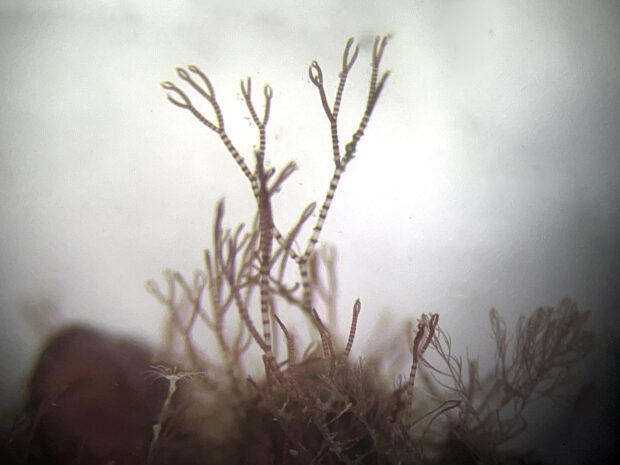
It's a finding that has delighted world-leading seaweed taxonomy authority Professor Christine Maggs, who told us: "I first encountered this tiny Ceramium in the early 1980s, and I have been wondering about it ever since. Natural England's surveys finally provided the missing piece of a scientific puzzle I've been trying to solve for most of my career."
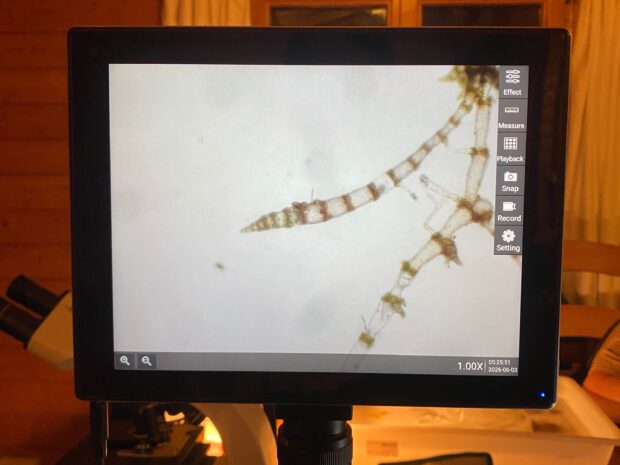
The Ceramium wasn't the only significant find. The surveys also recorded Ulva rigida, a green sea lettuce never previously confirmed in the UK; Neofolia rosea (little rosy tongue weed), only found once before in the UK, also on in the Fal Estuary; and Bonnemaisonia clavata, a delicate red seaweed not seen in British waters since the 18th century. Far from being fringe curiosities, their presence reveals the richness of life these maerl beds support, why they matter and what condition they are in.
Our Senior Marine Officer Angie Gall explains: "We've already recorded more than 380 species living on the surface of the maerl beds, and that's only the beginning. Many more species live within the maerl itself or appear at different times of year."
On an overcast morning in early June, BBC News journalist Harriet Bradshaw and camera operator Tony Jolliffe joined us aboard our survey vessel off the Cornish coast to film our dive team in action, surveying the maerl beds. Our team of scientific divers were also joined by seaweed expert Francis Bunker, who first identified the new Ceramium species during the original surveys.
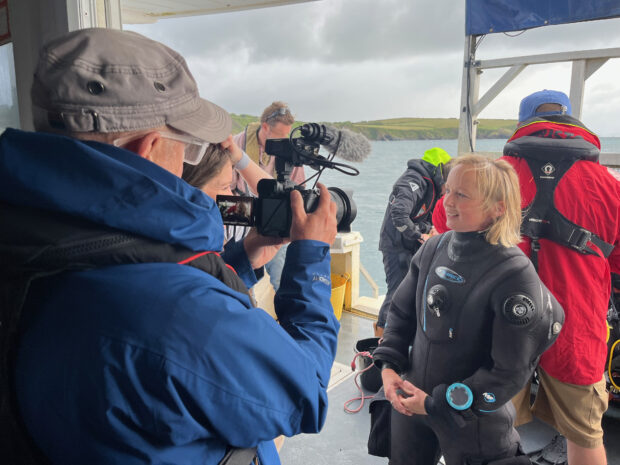
The BBC had already visited the Natural History Museum, where they filmed Professor Maggs and Professor Juliet Brodie, exploring the archival and scientific process behind formally describing a new species. Old pressed specimens and historical records are all part of the long paper trail that connects a new find to everything that came before it. Our filming on and under the water completed the picture, showing the fieldwork, the marine habitats and the people behind the discovery.
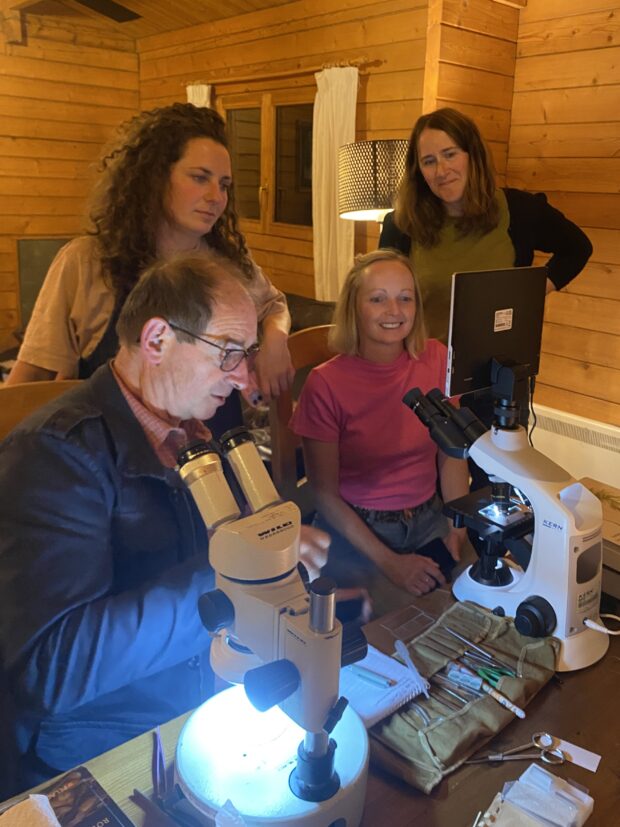
What happened back in the field lab that evening underlines how much these beds still have to reveal. Examining samples brought up from the seabed, Francis found another specimen of the same Ceramium, and this time it carried tetrasporangia: specialised reproductive structures (sporangia) found in certain seaweeds (particularly red algae), which had not been found before.
Why maerl matters
Maerl beds are among the most biodiverse shallow-water habitats in the entire north-east Atlantic. The pink, twiggy rhodoliths that form these beds grow about half a millimetre a year and some beds in the Fal Estuary are estimated to be up to 4,000 years old, pre-dating much of recorded British history. They act as nurseries for young fish and shellfish, provide shelter for a vast range of marine life, and lock away carbon in their sediments.
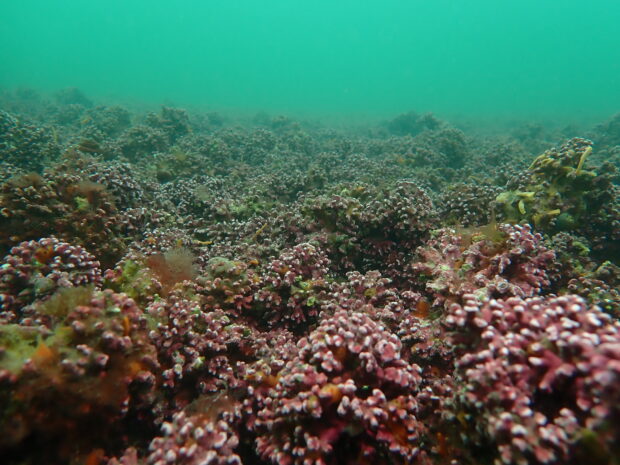
The vast majority of England's maerl is concentrated along Cornwall's south coast, and Natural England's work since 2023 has already led to the discovery of extensive areas of previously unknown maerl beds within and around the Falmouth Bay to St Austell Bay Special Protection Area - a reminder that even in well-studied waters, significant ecosystems can remain hidden. These are, as Angie describes them, "living archives of our natural history."
Yet they are also fragile. Physical disturbance, pollution, and climate change all pose ongoing threats. As Francis Bunker, who discovered the new Ceramium, reflected: "Finding species new to science in our waters is thrilling. But it also shows how much biodiversity is still hidden in these beds and what we stand to lose if these habitats are damaged before we've fully understood them."
Where the work goes next
The BBC story is part of a much bigger picture. Over the past two years, Natural England has been working intensively with partners to understand, map, and protect Cornwall's maerl beds. This has included detailed dive surveys and seabed mapping across the Falmouth Bay to St Austell Bay Special Protection Area and Fal and Helford Special Area of Conservation and the publication of the Cornwall Maerl Conservation Action Plan 2025–2030.
The Action Plan was developed through the UK's first dedicated Maerl Forum, led by Natural England, bringing together scientists, marine managers, conservationists, and policymakers. It sets out a shared framework for protecting Cornwall's maerl over the next five years, covering everything from monitoring and water quality to improving sustainability of fishing in the area, research into habitat restoration and public engagement.
Whole genome sequencing at the University of Exeter has mapped distinct maerl populations across south-west Britain, discovering a genetically unique population found only in St Mawes. This research, to be published soon, is directly informing advice to marine managers and contributing to national programmes including the ‘30by30’ global commitment to protect and properly care for 30% of land and sea by 2030, and the UK government’s Marine Protected Area Network Review.
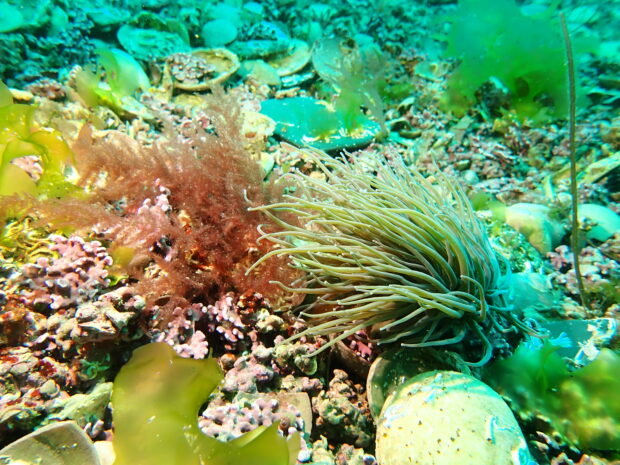
There is still much more to discover and much more to do. But what we do know is that maerl is a precious, important and irreplaceable habitat that is slowly giving up its secrets, with further exciting discoveries likely. As these latest findings show, the rewards for this careful, patient scientific work can be extraordinary: species hidden for centuries, or unknown to science entirely, waiting to be found in the waters just off our coast.
Look out for the BBC News story on YouTube. To find out more about our maerl work, see the Cornwall Maerl Conservation Action Plan and visit the Cornwall Maerl website.
9 comments
Comment by Aileen Montagu posted on
Call it CandyClaw!
Comment by Clare Foster posted on
Can I name your very special seaweed candy cluster fingers .. it’s so pretty .
Comment by Andrew Dunham posted on
Maggs Occulta seems like a good name for an elusive seaweed!
Comment by Gary Bryant posted on
Hello having watch the discovery of the sea weed called Mearl ( I think) I was mesmerised by the way the sea weed move and reminded me of the slender fingers of a nurse that recently looked after me in hospital hence my suggestion to name that particle sea weed would be . ANGEL FINGERS.
Comment by Sharon Day posted on
Dear Professor Maggs,
I showed my 4-year old grandson, Jude, a picture of the recently discovered seaweed and he thought it looked like a tickle so together we have come up with the idea of the 'tickled pink seaweed'.
We saw in the article that you were very pleased to find it so that you would be tickled pink!
Sharon 😊
Comment by Richard posted on
I saw the report on BBC - congratulations on this discovery - I would name it either Pink Maerlite or Pink Cornish Maerlite
Comment by John Richmond posted on
A lot of good names 👍for Maerl.
I fancy 'Needle Eye' or 'Eye of the Needle'.
Comment by Joy Ruddick posted on
Hi after watching on TV on Saturday, the new seaweed made me smile, after listening to so many awful disasters with war and natural disasters, it give me so much hope that brilliant things can still happen in our natural world. So the name I would like this delicate beautiful seaweed to be be is JOY. Joy means so many nice things with no negativity. Well done to the team xxx
Comment by Sarah Moore posted on
We heard about this discovery while
driving to southern France, and immediately had to find the photos of this elusive seaweed online. Beautiful. The four members of our family had completely different ideas for names so I’m sending them all on behalf of the family - quite a random Selection!
Pippi Longstockings
Sea crackle
Devil’s stockings
Axolotl’s fingers