By Marian Spain, CEO of Natural England
In this blog, NE's Chief Executive Marian Spain reflects on her recent visit to healthcare sites in Bristol to explore how partners are incorporating nature into health and wellbeing, and discusses Natural England's role in this.
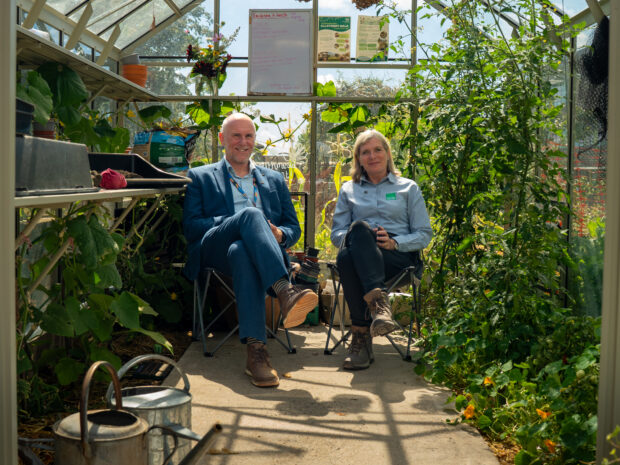
One of the moments that stayed with me from my visit to Bristol was sitting in the greenhouse in the community allotment at Southmead Hospital and hearing how this green space on a busy hospital estate has become a place of calm, connection and recovery for patients, staff and local people.
It was a powerful reminder that nature is not a nice-to-have in healthcare. It is part of what helps people feel well, recover well and live well.
Across my day in Bristol, I saw how partners are bringing nature and health closer together from a specialist mental health ward, to a community-focused GP practice, to one of the country’s largest hospital estates.
For too long, nature and health have often been treated as separate issues. But the evidence, and the lived experience of communities across England, tell us something different. Access to nature supports our physical health, our mental wellbeing and our quality of life. In fact, 90% of adults in England say green and natural spaces are good for their mental health and wellbeing.
That is why Natural England’s new strategy, Recovering Nature for Growth, Health and Security, champions creating healthier places for people to live, work and spend time.
Nature is part of our health infrastructure
When we think about healthcare, we naturally think about hospitals, GP surgeries, medicines and treatments. All of those are vital. But we also need to recognise the role nature plays in supporting health and wellbeing long before people need clinical care.
A walk in a local park, access to a community garden, or time spent in a wildlife-rich green space can all make a positive difference to people's lives. Yet access to nature is not experienced equally. One in five households do not have access to a green or blue space within a 15-minute walk, with the greatest inequalities often affecting more deprived communities.
At Natural England, we want everyone to have the opportunity to access and benefit from nature, whatever their postcode. We also know that healthy natural environments can strengthen communities, support economic growth and build resilience to climate change. That is why investment in nature should be seen as investment in healthy places and people.
Seeing what's possible
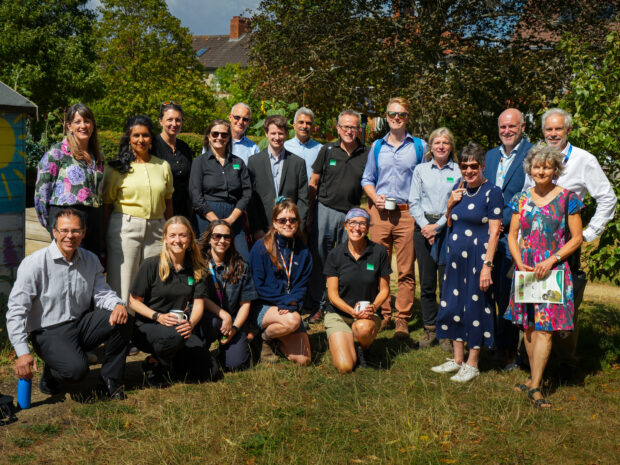
What I saw in Bristol showed how this ambition can be translated into practical action.
At Blackberry Hill Hospital, Avon and Wiltshire Mental Health Partnership NHS Trust has incorporated nature into the design and operation of the new Kingfisher Ward, recognising the role that nature-rich environments can play in supporting recovery and wellbeing.
At Charlotte Keel Medical Centre, partners including Alive Activities and the West of England Mayoral Combined Authority have helped transform an outdoor courtyard space, demonstrating how even busy urban healthcare settings can create opportunities for connecting with nature. Over lunch they described to me what a difference it makes to the quality of breaks at work for staff, and how the courtyard garden has supported patients, some of whom now volunteer their time to look after the space.
And at Southmead Hospital, North Bristol NHS Trust is showing how a major healthcare estate can work harder for both people and Nature through community allotments, green infrastructure and biodiversity improvements that support health, wellbeing and environmental outcomes.
Each project was different, but the message was consistent: when organisations work together, nature can become part of everyday care, not an optional extra.
What impressed me most was the strength of the partnerships behind this work. Across Bristol, NHS organisations, local government, public health teams, community groups and environmental organisations are collaborating around a shared vision. Through initiatives such as green social prescribing, nature-based health projects and wider place-based partnerships, they are demonstrating how health and nature objectives can reinforce one another.
Better outcomes for people and nature
What gives me optimism is that this is not a choice between helping people or helping nature. The most successful examples deliver both.
Creating greener places can improve wellbeing, support biodiversity, strengthen community resilience and help us adapt to climate change at the same time. These are not competing goals. They are mutually reinforcing.
Research suggests that regular access to greenspace could reduce GP visits by 28% and save the NHS an estimated £2.1 billion each year. At a time when health services are under increasing pressure, this is a powerful reminder that prevention matters just as much as treatment.
To support organisations looking to take practical action, Natural England has worked with NHS England and the Centre for Sustainable Healthcare to develop the Nature for Health Resource Hub, bringing together tools, guidance and case studies that help healthcare sites improve their green spaces.
The people I met in Bristol are showing what that looks like in practice, with commitment, imagination and care. There is much we can learn from them.
Our commitment
Natural England's ambition is clear: we want nature to be part of everyday life for everyone.
That means restoring nature, improving access to green and blue spaces, and working with partners across the health, planning, environmental and local government sectors to tackle inequalities and improve wellbeing.
The examples I saw in Bristol show what is possible. The challenge now is to build on these successes and make them the norm rather than the exception.
Find out more
Visit the Nature for Health Resource Hub: https://nhsforest.org/resources/
Discover Green Social Prescribing tools and resources: https://socialprescribingacademy.org.uk/resources/launch-of-green-social-prescribing-innovation-community/
1 comment
Comment by Pete Johnstone posted on
This is fantastic. Lovely to see this initiative flourish, yet policy makers have known the health benefits of, and access to good quality green space for 20 plus years.
So why is it not mandatory now for initiatives like this to be rolled out across the healthcare sector and for good measure in new housing estates?
Would anyone in NE care to answer the question?