By Roxanne Gardiner, Senior Officer, Natural England Wildlife Licensing Service and Olivia Beatty, Higher Officer, Wessex Area Team
Natural England has issued a licence enabling the next phase of white-tailed eagle reintroductions in southern England, permitting the release of up to 20 birds in Exmoor National Park over three years. In this blog, Senior Officer Roxanne Gardiner and Higher Officer Olivia Beatty explain Natural England's role in assessing the application, how potential risks, including concerns from the farming sector, were carefully considered, and why Exmoor has been chosen as the next release site.
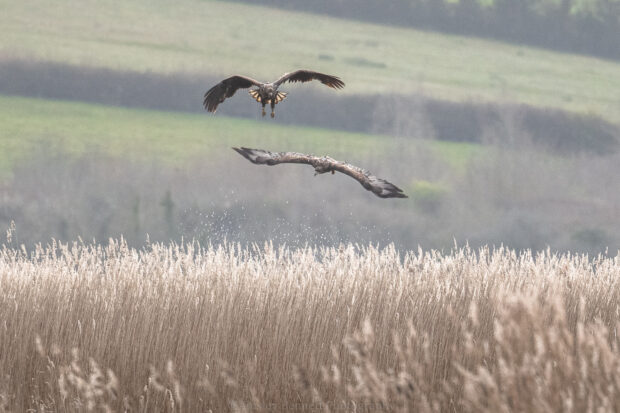
Natural England has joined Forestry England, the Roy Dennis Wildlife Foundation and Exmoor National Park Authority in announcing the exciting next steps in reintroducing white‑tailed eagles to southern England.
Natural England has issued the licence that enables this next phase of the Roy Dennis Wildlife Foundation- and Forestry England led project to move forward. The licence permits the release of up to 20 white‑tailed eagles in Exmoor National Park over three years, and sits alongside the existing licence for the successful Isle of Wight project, which has resulted in the first breeding white tailed eagles in England for 240 years (Natural England issues licence to release white-tailed eagles – Natural England; White-tailed eagle reintroduction project | Forestry England).
White‑tailed eagles are our largest native bird of prey. Once widespread throughout England’s coasts and wetlands, they were lost due to human persecution. Their return in recent years is a powerful symbol of nature recovery that has captured the public imagination; and shown how ambitious but well‑planned conservation projects can help restore nature.
As top predators and scavengers, white tailed eagles help to balance the ecology of our landscapes, regulating prey populations, recycling nutrients and driving higher biodiversity. By harassing and controlling intermediate predators like buzzards and magpies, they also help protect smaller birds and mammals from over-predation. On the Isle of Wight, there is already evidence that more lapwing chicks are fledging as a result.
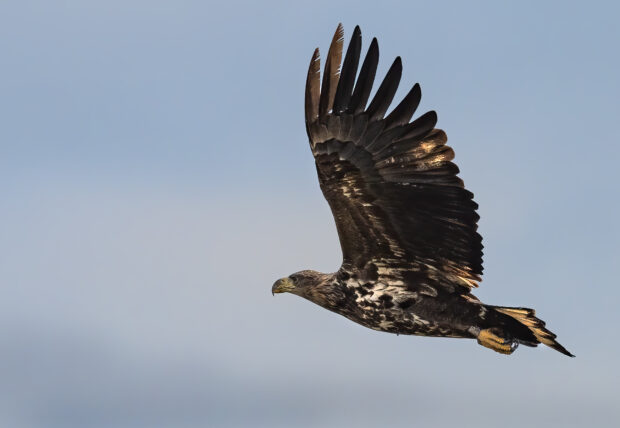
The selection of Exmoor as a new release site reflects the wider shared ambitions that Natural England and Exmoor National Park Authority have long been working towards - a landscape where nature is recovering at scale. Detailed feasibility studies have been led by the Project and historical records confirm that white‑tailed eagles once bred along the Exmoor coastline.
Tracking data from birds released on the Isle of Wight shows that several have already visited the Exmoor area. Exmoor’s mix of coastal, woodland and wetland habitats provide excellent conditions for the species as it continues to re‑establish in southern England.
Natural England’s role in enabling responsible reintroductions
Natural England’s role in this project is as the statutory wildlife licensing authority. Our responsibility is to assess applications for conservation translocations carefully and transparently, ensuring they meet the high standards set out in Defra’s Reintroductions and other conservation translocations: code and guidance for England.
Staff from Natural England’s Wildlife Licensing Service led the detailed, evidence‑led assessment of the application submitted by the Project. The assessment considered the contribution of the project nationally to white‑tailed eagle recovery. We also considered:
- The likely success of the project in terms of white-tailed eagle recovery
- Experience of the project partners
- Governance and long‑term funding arrangements
- Disease and biosecurity risks
- Ecological risks and opportunities
- Socio‑economic risks and opportunities including the potential to affect farm businesses
- Monitoring and management proposals
Natural England’s Wessex Area Team played a leading role in assessing the potential impacts of the Project on protected sites and led the Habitats Regulations Assessment. This work was done in collaboration with Natural England’s Chief Scientist Directorate, bringing together local knowledge and national scientific expertise. They focused on how the released eagles are most likely to use the landscape.
Evidence shows that young birds may spend several years exploring areas across the UK and into northern Europe, but when they settle and establish breeding territories it is usually within 60km of the release site. Basing the assessment on this well‑understood behaviour, the team was able to look carefully at realistic ways the released birds might interact with nearby protected sites and key species within those sites in the years following release.
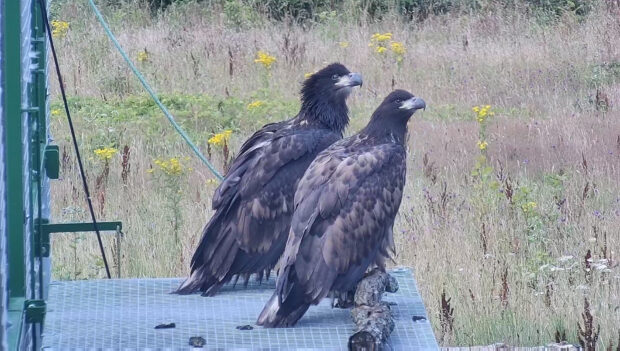
We are aware that some stakeholders have raised concerns about the project, especially around livestock predation. Our team have joined meetings with farming sector representatives and read the local consultation responses. These concerns have been fully considered by both the project and Natural England. We understand that there are genuine fears but have also reflected on evidence from six years of monitoring the 45 birds released by the Isle of Wight project, and their offspring, which shows no recorded feeding on lambs or other livestock. These birds have only been observed to take natural prey, preferring fish and coastal birds, which is in line with comparable areas in Europe.
The project management plan and licence conditions include some key measures that we are confident should mitigate the concerns that have been raised:
- There will be a project steering group that includes farming sector representatives.
- There is a commitment to long‑term monitoring of the eagles’ activities, both through GPS tracking and through activity reporting forms.
- The licence duration is for 11 years, by which time released birds will hopefully have settled and begun breeding.
- There will be a communications plan and project officer, with the aim of raising awareness, supporting monitoring, and ensuring that emerging concerns are investigated and, where appropriate, addressed.
- The project partners have shared a letter of commitment with farming sector representatives and the wider steering group, setting out that they will continue monitoring and engagement beyond the 11-year licence period.
In assessing the project, Natural England has taken a balanced and evidence‑led approach, applying the principles of the Code and Guidance in a way that supports ambition for nature recovery, while remaining proportionate, transparent and impartial, and consistent with our statutory duties. We hope this gives confidence that risks have been carefully considered and appropriately managed.
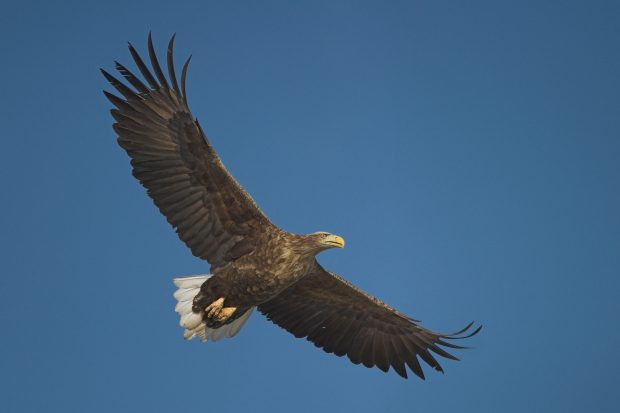
A flagship project for nature recovery
This project forms part of a wider effort to support the recovery of white‑tailed eagles across England, alongside projects and proposals in Scotland, Wales and Ireland. Natural England continues to work closely with other regulators to share learning and promote best practice for responsible species reintroductions.
We are pleased to support this next phase of a landmark conservation programme and look forward to continuing to work with the project team as releases begin this summer. You can read more about today’s announcement in the joint press release, led by Forestry England on behalf of the project partners.
6 comments
Comment by D R Holmes posted on
Do these birds only eat Scottish lamb? Plenty of evidence of predation from Scots farms, similar to that from Ravens(for which compensation is given). If you work to a”balanced and evidence led basis “,why have you got the Muir burn restrictions so sadly wrong?
Comment by Natural England posted on
Natural England's assessment of the Exmoor application found that yes lamb predation does seem to be unique to west Scotland, with no evidence of livestock predation in mainland Europe, Ireland or southern England. Muirburn regulations only apply to Scotland; however you can read about Natural England's advice to Defra on heather and grass burning at Natural England’s response to Defra’s consultation on heather and grass burning – Natural England
Comment by Rob Yorke posted on
Good work liaising with the local conservation and farming communities - especially as the 'ecology of fear' aspect is an interesting angle in constraining the unchecked expansion of red kite and buzzard populations.
The availability of 'naturally' provisioned prey (not artificial feeding stations) will be a key aspect to monitor as to mitigating any potential conflict with farming and other rural livelihoods.
best wishes
Rob Yorke
Comment by Margaret Vaughan posted on
Would this introduction affect wadìng bird populations on the moors, such as curlews, migrating golden plovers, dottereĺ etc.?
Comment by Peter Drake posted on
Broadly speaking, the program of reintroduction is to be applauded. It is essential though that all views are taken into account, especially those whose livelihood depends on close monitoring of issues like predation. Peter Drake teacher Queen Elizabeth high school.
Comment by peter waller posted on
I watched the release on the Isle Of Rhum in the early 80s and was married here in Exmoor and would love to be of help with this scheme to release birds here on Exmoor. I watch these birds regularly up in the Inner Hebrides and my knowledge of Exmoor may be of help! Pete Waller. Email powerclean@aol.com