By Tracey Hill, Senior Officer - Sites , Nature and People
Natural England is making it easier than ever to submit requests relating to protected sites. From 20 April 2026, we are introducing Defra Forms, a new online submission portal, as the primary route for applications and enquiries affecting Sites of Special Scientific Interest (SSSIs) and other protected sites. Whether you are a landowner seeking consent, a public body with an assent request, or a developer looking for early advice, the new system is designed to make the process clearer, more consistent and more straightforward. Read on to find out what is changing, what it means for you, and how to get started.
Natural England is introducing Defra Forms - an online submission portal - as the primary route for submitting requests relating to Protected Sites, including Sites of Special Scientific Interest (SSSIs).
This change is part of wider work to modernise how statutory casework is received and processed. It aims to create a clearer, more consistent experience for those seeking advice or permission to carry out activities that may affect protected sites.
From 20th April 2026, applicants will be able to submit requests using the new online forms. These will cover advice requests, SSSI consent applications and public body assent requests.
Why this change is happening
Natural England receives thousands of enquiries each year relating to activities affecting protected sites. These requests currently arrive through a mixture of emails, letters and informal enquiries.
The new tool introduces a structured online route for submissions. This helps ensure that the key details required for assessment are captured early in the process, minimising the need for NE to go back to the customer for additional information.
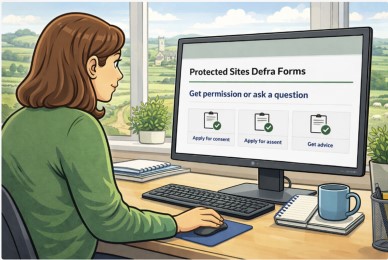
By improving the quality and consistency of submissions, Natural England can process requests more efficiently and provide clearer responses.
What the new tool will cover
The new system will support three main types of requests:
1. SSSI Consent applications
Landowners or occupiers must obtain Natural England’s consent before carrying out certain activities on SSSI land.
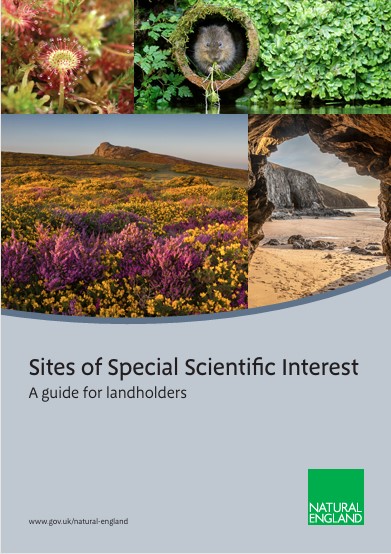
These activities are known as Operations Requiring Natural England’s Consent (ORNEC) and may include works such as drainage, vegetation clearance, construction, or changes in land management.
The new consent form provides a structured way for applicants to describe the proposed activity, its location and timing, and to submit any supporting documents.
2. Public body Assent requests
Public authorities also have legal duties when carrying out operations that may affect SSSIs.
Under the Wildlife and Countryside Act, public bodies can consult Natural England and obtain Assent before carrying out operations that could damage an SSSI.
The new Assent form enables organisations such as local authorities, infrastructure operators and statutory agencies to submit these requests through a consistent online route.
On 17 June 2024, Natural England introduced changes to how we handle notices relating to Sites of Special Scientific Interest (SSSI) Assent. These changes apply to those acting on behalf of public bodies subject to section 28G of the Wildlife and Countryside Act (as amended).
The changes focused on four key areas:
- Public bodies must screen proposed activities and only submit assent notices where the activity is likely to disturb or damage the special features of a SSSI.
- Public bodies must carry out a Habitats Regulations Assessment (HRA) where activities are planned on or near a SSSI that is also designated as a European site.
- Where insufficient information is provided in an assent notice, Natural England may request further information or ask that the notice is withdrawn.
- Where a consent notice is submitted in place of an assent notice, Natural England may request that the notice is withdrawn and resubmitted correctly.
Building on this approach, Defra Forms provides a structured online route to help ensure notices are proportionate, complete and aligned with statutory duties.
3. Advice requests, including Section 28i Advice
Applicants can use the "Ask Natural England a Question or Get Advice" form when they need guidance about activities that may affect a protected site.
This allows land managers, developers, consultants and environmental organisations to seek early guidance before progressing plans.
This includes general advice enquiries, as well as formal Advice requests under Section 28i of the Wildlife and Countryside Act.
Section 28i places a duty on public bodies to consult Natural England before permitting operations that may damage a Site of Special Scientific Interest (SSSI).
Benefits for applicants
The new forms are designed to make the process clearer and easier for users.
1. Clearer guidance
Each form includes prompts explaining the information that Natural England needs in order to assess a request.
This reduces uncertainty for applicants and helps ensure submissions contain the necessary detail from the outset.
2. Faster processing
Providing complete information at the start reduces the need for follow-up queries.
This can help Natural England review requests more efficiently and provide decisions more quickly.
3. A more consistent process
Using a single digital route helps ensure requests are handled consistently across England.
This benefits both applicants and Natural England staff by creating a clearer and more predictable process.
4. Improved transparency
Applicants will receive confirmation when their form has been submitted, helping to ensure that requests have been successfully received.
Clearer information about proposed activities also supports better communication during the assessment process.
What this means for stakeholders
The new system will be relevant to a wide range of users, including:
- Landowners and land managers
- Environmental NGOs
- Infrastructure and utility operators
- Planning consultants and environmental professionals
- Public authorities and statutory bodies
Anyone planning activities that may affect an SSSI should ensure they are familiar with the new forms and the information required before submitting a request.
A gradual transition
Defra Forms will become the primary route for submitting requests relating to protected sites.
However, Natural England recognises that not all users may be able to access online forms. In limited circumstances, current submission routes will remain available as exceptions.
The Natural England enquiries team can support you with alternative submission routes, please contact enquiries@naturalengland.org.uk
Notices of Proposal that have already been prepared and are ready for submission should be sent via the existing email route.
Looking ahead
The introduction of Defra Forms represents an important step in modernising how Natural England manages protected sites casework.
By making it easier for applicants to submit clear and complete requests, the new system will help support both efficient case handling and effective protection of England’s most important wildlife sites.
The new forms include built-in guidance to help you complete your submission.
Use Defra Forms to guide you through submitting your request.
Recent Comments