This summer, if you’re looking for fun and accessible days out that are low-cost, then we have you covered. Not only is spending time in nature great for your wellbeing, it can also be great for your bank balance. Here are our suggestions for our favourite affordable days out in the South East!
Whether you're after a gentle walk or a long trek, wonderful wildlife or ancient history, the South East has it all. It's tough to narrow it down, but here are some of our favourite days out for you to enjoy!
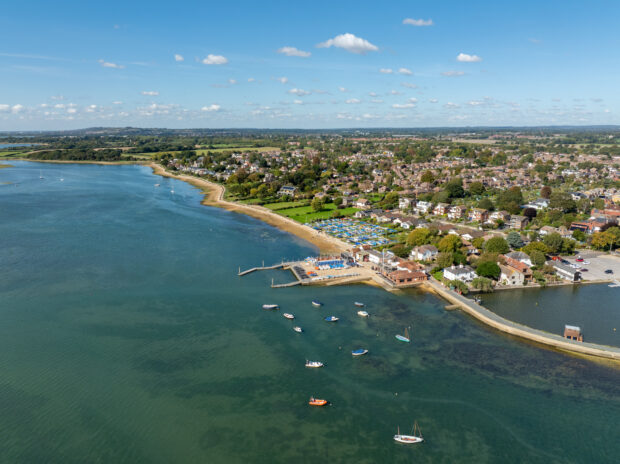
The King Charles III England Coast Path at Chichester Harbour
Enjoy a stretch of the King Charles III England Coast Path around Thorney Island, taking in stunning views of Chichester Harbour – all within reach of Chichester and Portsmouth.
This 8-mile route begins in the picturesque village of Emsworth and ends at Southbourne, though can be completed in either direction, and passes by special saltmarshes, mudflats and dune habitats. The fully waymarked coast path offers the chance to spot seals, coastal wildflowers and birds including terns, redshanks, curlews and ospreys. Remember, if seal or birdwatching at the coast make sure to keep your distance and not cause any disturbance!
From Emsworth you can join the coast path at Queen Street, on the eastern side of the island you can join at Prinsted Lane in Prinsted. If you fancy an even bigger challenge this stretch forms part of over 200 miles of coast path that is now open across Hampshire & Sussex!
Please be aware that Thorney Island is an active army base. There are two security gates on either side of the island where you will be required to use an intercom system to gain onward access. Always check the National Trails website in advance of your walk to check for any temporary MOD closure notices.
Getting there: You can catch the train from Chichester or Portsmouth to Emsworth. If you're doing the full 8-mile stretch, catch the train home from Southbourne.
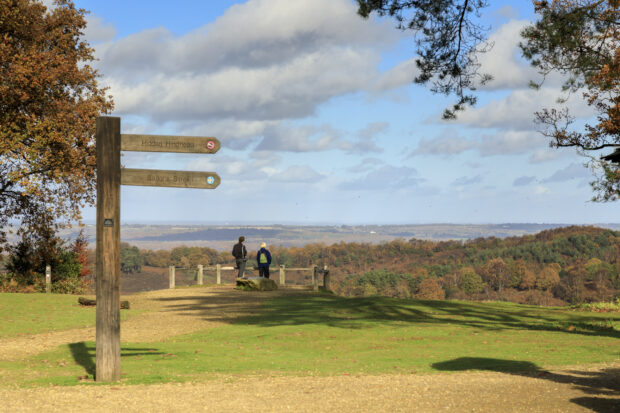
Hindhead Commons, part of the Wealden Heaths National Nature Reserve (National Trust)
Across Surrey, Hampshire & West Sussex is a 2,440 hectare patchwork of some of England's most important ancient heathlands - the Wealden Heaths National Nature Reserve.
Hindhead Commons & the Devil's Punch Bowl, one of twenty sites across Wealden Heaths, is the perfect spot to enjoy what the NNR has to offer. Devil's Punch Bowl offers spectacular views of the colourful heath landscape. Named for the local legend of the Devil scooping and throwing dirt at Thor, the Punch Bowl has an onsite cafe with toilet facilities and is a short step-free walk from a car park and bus stop.
Hindhead Commons is home to a well waymarked walking routes from which you may see sunbathing reptiles, including sand lizards and adders, blooming heather plants, and if you're lucky, and visit near dusk, the rare nightjar bird.
With the ongoing hot and dry weather, please remember to act responsibly while in natural spaces. This NNR's heathland is especially vulnerable to wildfires, so please do not light fires or BBQs.
Getting there: Take the number 19 bus from Haslemere Railway Station. Haslemere is a short train journey from both Godalming and Guildford.
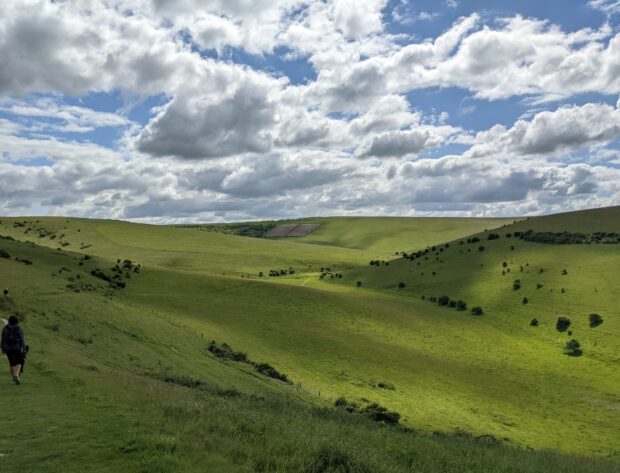
Mount Caburn National Nature Reserve near Lewes
Take in spectacular views of the South Downs from Mount Caburn National Nature Reserve - a short trip from Brighton.
Used since the Iron Age as a base for fortifications, the south facing chalk hill and valley of Mount Caburn's chalk grassland, a globally rare habitat, is home to wildflowers and diverse range of butterflies and moths. Its wildlife includes burnt-tip, common and pyramidal orchids as well as Adonis blue butterflies, silver-spotted skippers and scarce forester moths.
The flora and fauna of Mount Caburn have flourished due to traditional grazing practices used for thousands of years across the South Downs. These management methods are still used to maintain the grassland today. The conditions required to create this habitat mean wildlife is particularly susceptible to human disturbance, so please remember to take litter home with you and to leave no trace of your visit.
Getting there: Catch the Brighton to Eastbourne/Hastings train and get off at Glynde. Alternatively, for a longer walk, start at Lewes and head eastwards up Chapel Hill onto the South Downs.

Thames Path National Trail
Spanning 185 miles, the Thames Path National Trail passes through historic towns and cities, peaceful water meadows, bustling riverside communities and our capital.
Starting at the source of the Thames, to the west of Cirencester, the full 185-mile route crosses 8 counties and takes you all the way to Woolwich in East London. If you don't fancy the full challenge, there are plenty of great short routes along the way.
Enjoy a 9-mile stretch from Oxford to Abingdon: beginning at Folly Bridge, the route takes you past Christ Church Meadow and onwards past Iffley Lock and into the Oxfordshire countryside where the river passes meadows and farmland. Keep an eye out for waterbirds, such as kingfishers, and dragonflies including the Southern Hawker.
Another great spot to join the Thames Path is Henley-on-Thames. This beautiful Georgian town is a relaxed spot to enjoy riverside pubs and a laidback stroll along the river. Henley is also home to an interactive mural celebrating 30 years of the Thames Path which you can find at Mill Meadows Pavillion.
London has many starting points to offer, from leafy riverside nature of Richmond, the hustle & bustle and iconic views of the City, to the maritime history of Greenwich. Through London the path, mostly, covers both banks of the Thames so there are ample opportunities for creating your own circular route.
Plan your own trip, and find information on any diversions, by visiting nationaltrail.co.uk
Getting there: For the Oxford to Abingdon route, catch the train to Oxford. To return to Oxford take the bus from Abingdon.
For Henley catch the train from Twyford which is reachable direct from London Paddington and Reading.
If walking the full route from west to east catch the train to Kemble and then the 882 bus to Smerrill Quarry, a 30 minute walk from the start of the route. Return from Woolwich station.
If you are visiting the coast, rivers or other open water, check local conditions, weather and tide times, follow safety signs and choose a lifeguarded beach where possible. Consult with Tide Times to help plan your visit, and read up on water safety advice before you set out.
With the recent dry, hot weather, wildfire risk is high across the countryside. Please pack a picnic instead of a barbecue, take your rubbish home with you, and if you spot an unattended fire, get to a safe place and call 999.
Remember to always follow the Countryside Code when you’re out and about in nature!
Recent Comments