By Jessica Elias, Natural England
Nature-based Solutions are increasingly recognised as an effective way to respond to climate change while restoring nature and improving people’s wellbeing. Through the Nature Returns programme, we’ve had the opportunity to see how one approach in particular – wood pasture creation – can be a popular strategy for landowners and land managers.
Recently, we’ve published a report sharing our learnings so far. In this blog, we explore some of the ways that wood pasture creation took place, what choices were made and what still needs to be understood to increase wood pasture creation.
Firstly, what is wood pasture?
Wood pasture and Parkland is a priority habitat, made up of scattered trees, grazed scrub and grassland. These systems house a rich diversity of species and have developed over long periods of time by established management traditions.
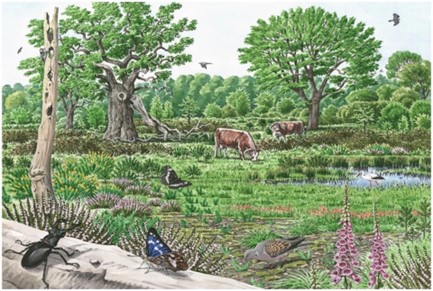
While newly created wood pasture cannot replicate this history in the short term, it can aim to follow the same principles and begin to deliver similar benefits.
Any form of wood pasture can help address several challenges at once. Trees capture and store carbon, helping to tackle climate change. They also provide shade for livestock, improve soil health and slow the flow of water across land – all important points to consider as we adapt to a changing climate.
So how was new wood pasture created?
Across the Nature Returns programme, we’ve been working with partners in six Local Partnership Projects across England. Wood pasture creation was a popular choice at several of these sites, with each site approaching it differently.
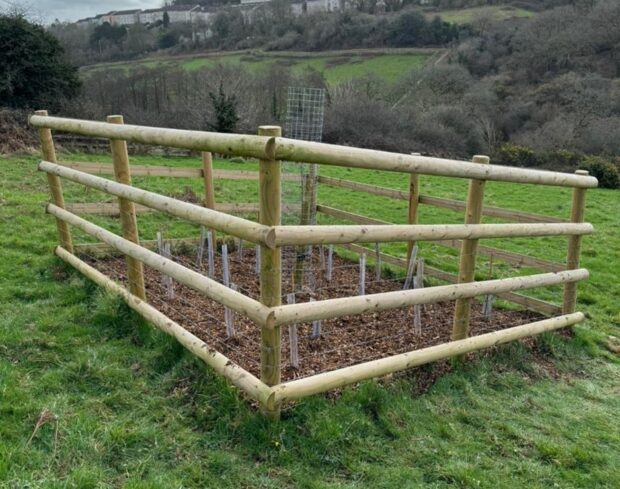
At Wild Exmoor, for example, trees have been planted in small copses across sloping grassland, often surrounded by shrubs. Meanwhile, at sites within the Plymouth Natural Grid project, planting has focused on larger clumps of trees, shaped by the needs of more urban or peri-urban landscapes.
Despite these differences, there are some common themes. Most projects planted a mix of native broadleaved species – including oak, cherry, alder and hazel – to create diversity and resilience.
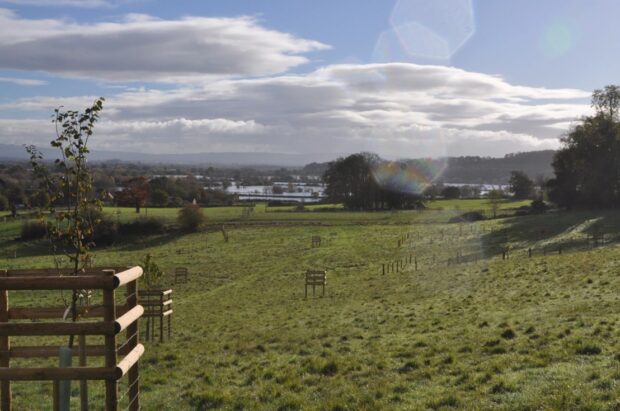
Grazing has also been a key part of the picture. Different sites are using different combinations of animals, including some distinctive choices like Exmoor ponies and Mangalitza pigs. These decisions matter: grazing shapes the vegetation structure and there may be trade-offs associated with the chosen livestock. It also affects the overall carbon balance of the site when emissions from grazing animals are taken into account.
What became clear is that there was no single ‘right’ way to create wood pasture. Each site reflects its local landscape, its history and the priorities of the people managing it.
What have we learned so far?
Reflecting on the projects, several common themes stood out
Flexibility is key. Wood pasture creation isn’t a one size fits all model. It can be adapted to suit local conditions, whether that’s soil type, local perspectives or the practicalities of managing land.
Any form of tree planting is beneficial. Introducing trees into previously treeless pastureland is likely to bring benefits, even where planting is relatively modest or trees with lower carbon storage potential were chosen. There are nuances to this though, particularly around carbon storage potential of trees and whether these offset emissions from livestock grazing on the land.
There are challenges associated with cost. Investment in wood pasture creation can vary widely depending on the level of protection needed, such as fencing or guards. Costs ranged from £3 to £50 per tree and there is likely to be a trade-off between affordability and higher potential establishment success.
Good advice is important. Creating wood pasture successfully requires careful planning and long-term thinking. Decisions about which species to plant, how to protect young trees, and how to manage grazing all play a role in the outcome. Access to clear, practical guidance is essential if more land managers are to adopt this approach.
We need to strengthen the evidence base. While wood pasture was a popular choice for our partners, there’s still a lot we don’t understand about these systems. In particular, we need to understand more about how much carbon these systems can store over time and how they can contribute to wider environmental targets. Strengthening this evidence base through further research will help support policy decisions, development and future investment in Nature-based Solutions.
What’s next?
The Nature Returns programme will continue to work with its local partners in the coming years to track the development of newly created habitats and associated changes in carbon storage and biodiversity. By taking a ‘learning by doing’ approach, we can understand more about what works best and crucially, what doesn’t.
To find out more you can read our full report, alongside other Nature Returns publications.
Recent Comments