By Denise Latham, Senior Officer, Catchment Sensitive Farming, Natural England
What happens when a routine farm visit grows into something far more ambitious? Senior Officer Denise Latham shares the story of the Walcot Wiggle, how a conversation on a Shropshire hillside evolved into a landmark river restoration project that is putting the natural meanders back into the River Kemp. From funding breakthroughs to the moment water first flowed through newly restored channels, this is a story about what becomes possible when farmers, advisers and partners share a vision, and the confidence to pursue it.
Eighteen months ago, I visited a farm in the Clun catchment to talk through a Catchment Sensitive Farming Capital Grant application. The plan was fairly straightforward: a few ponds, some practical improvements and advice on how to make the most of the opportunities available.
But as I walked the farm with one of the landowners, and Helen Oliver from the Shropshire Hills National Landscape's Farming in Protected Landscapes team, it became clear there was an opportunity to think much bigger.
Working closely with the landowners, we brought together the right partners, including the Environment Agency and Severn Rivers Trust. Together, we explored what was possible and shaped a shared vision for restoring the river. Through those conversations and partnerships, the idea gradually grew into what became the ‘Walcot Wiggle’.
Projects like this do not happen without funding. The initial feasibility study was funded through a FiPL grant. The Walcot Wiggle has been supported by the Environment Agency's Local Water Environment Grant, the Shropshire Hills National Landscape 30by30 Fund, the Elgol Fund for Nature and the HDH Wills 1965 Charitable Trust.
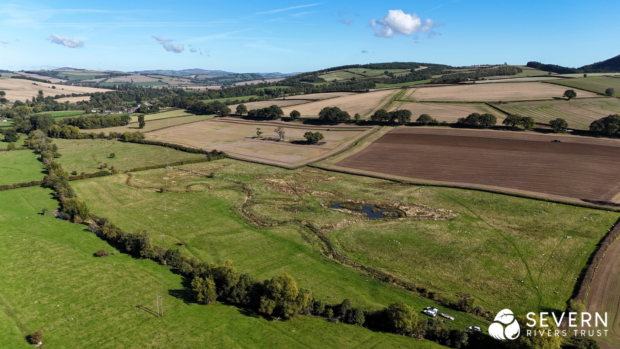
What we're doing and why it matters
This section of the River Kemp was straightened in the 1800s to improve farming but, in doing so, it reduced the variety of habitats the river could support and changed the way water moved through the landscape.
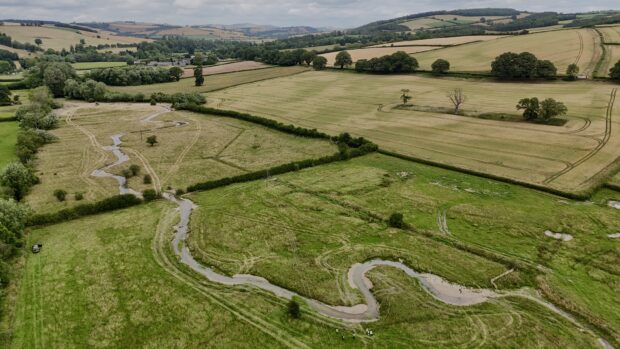
By restoring more than a kilometre of meanders and reconnecting the river to its original channel, we are giving the River Kemp the space to behave more as it once did. That brings benefits for both people and wildlife. The "wiggles" lengthen the river's course and slow the movement of water, helping to reduce flood risk downstream. They also give sediment and nutrients more opportunity to settle, improving water quality.
The restored floodplain makes the landscape more resilient to a changing climate, helping it cope with both heavier rainfall and longer dry spells. At the same time, the meanders, backwaters, wetlands and seasonally wet grassland create a much richer variety of habitats for birds, fish, amphibians, insects and aquatic plants.
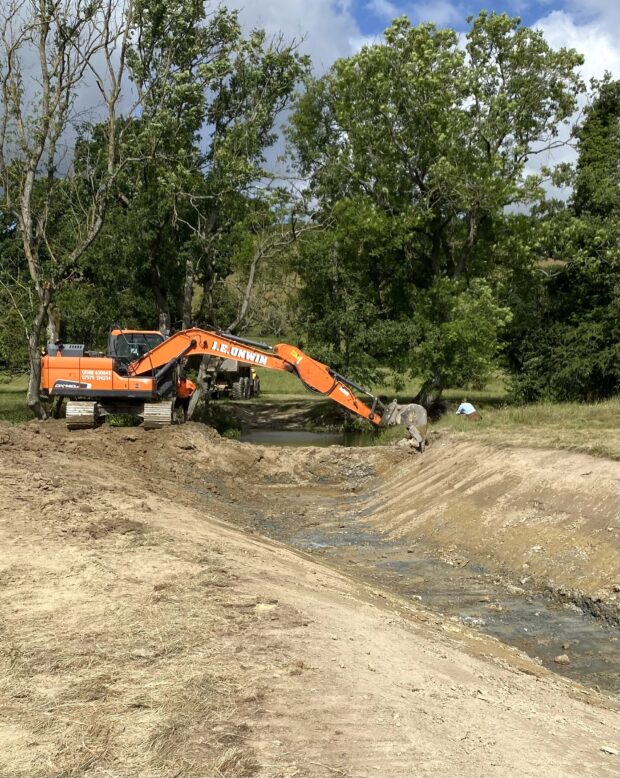
Because the River Kemp feeds into the River Clun, home to internationally important species including Atlantic salmon and the endangered freshwater pearl mussel, improving this stretch of river will also benefit wildlife across the wider catchment by creating cleaner water and better spawning and feeding habitats.
People have been shaping the River Kemp for centuries. The difference now is that we are working with the river, giving it the space to do what it does naturally and creating a more resilient landscape for farming, wildlife and the people who depend on both.
Farming and nature, hand in hand
One of the things I'm most proud of about the Walcot Wiggle is that it shows what's possible when farmers are given the confidence and support to work with nature.
Since the restoration began, Natural England CSF Advisers have been working closely with both landowners and have helped secure two Countryside Stewardship Higher Tier agreements. Although there was no certainty that the Higher Tier agreements would be available when we started, we planned the project with that in mind. The baseline surveys, design work and restoration were all carried out so that, if the opportunity came, the farmers would be well placed to secure agreements that recognised the value of making room for the river to move.
For me, that's one of the biggest successes of the project. We've restored the river, but we've also helped create a long term plan that supports productive farming while giving the river the space to move naturally, improving water quality, reducing flood risk and creating more room for wildlife to thrive.
Healthy floodplains provide multiple benefits to farming. Improved soil moisture during dry periods, more resilient grassland, reduced erosion and better water management all contribute towards productive farm businesses that are better equipped to adapt to a changing climate.
At the same time, wildlife benefits from a more connected landscape where rivers, wetlands and grasslands can function as a more joined up landscape.
For me, this is a great example of Natural England’s approach in action, putting farmers and landowners at the heart of nature recovery through practical support and local knowledge.
The reconnection
Standing beside the River Kemp as water flowed through its new meanders for the first time was a proud and memorable moment.
After 18 months of planning, surveys, discussions and collaborative working, it was incredibly rewarding to see the vision become reality. Watching the river begin to reconnect with its original channel was a reminder that river restoration is not simply about moving earth or reshaping channels; it is about restoring natural processes that will continue to evolve long after the machinery has left.
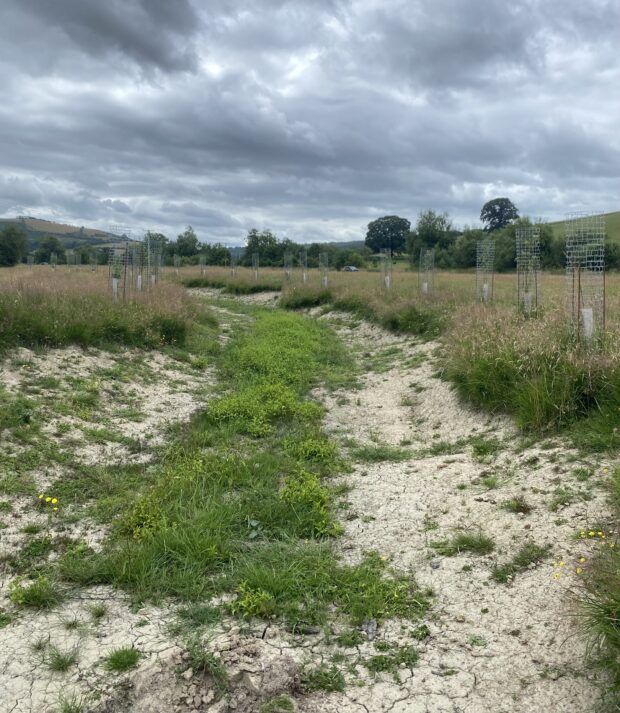
Perhaps most exciting is that this is only the beginning. As vegetation establishes, wetlands develop and wildlife responds, the benefits of the project will continue to grow year after year. We have secured long-term monitoring, allowing us to track how the site develops over time, measure the project's environmental benefits, and use this evidence to inform future restoration work. Equally importantly, the relationships built throughout the project continue to strengthen, providing opportunities to develop the site further and inspire similar projects across the Severn River Basin.
The Walcot Wiggle shows what can be achieved when ambitious landowners, trusted advice, sound evidence and strong partnerships come together with a shared vision. By putting the wiggle back into the River Kemp, we are helping to create a healthier river, a more resilient farming landscape and a better future for nature. I hope it provides a model that gives us, as well as other farmers and landowners, the confidence to take on similar projects.
Find out more To learn more about Catchment Sensitive Farming and how we can support farmers and landowners, visit Catchment Sensitive Farming: advice for farmers and land managers - GOV.UK and Catchment Sensitive Farming - Our advice | Farming Advice Service
Recent Comments