By Zoe Shorter, Project Manager for the SAMM Team, Thames Solent Area Team
This blog explains the findings of an independent evaluation of the 15-year Thames Basin Heaths SAMM Project. Evidence suggests the project is successfully mitigating recreational pressure on protected heathlands, with stable or increasing bird populations despite housing growth, and the report has identified wardening, education and partnership work as key strengths.
Spanning across Surrey, Hampshire and Berkshire, the Thames Basin Heaths is a stunning collection of lowland heathland of international importance.
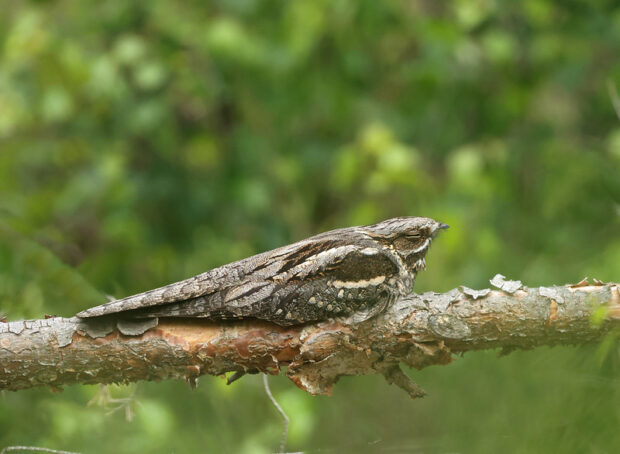
The landscape is home to an incredible range of flora and fauna, including every species of native reptile, rare Silver-studded Blue and Grayling butterflies, a dazzling array of dragonflies, and rare birds including the Nightjar, Dartford Warbler and Woodlark.
For the last 15 years, the Thames Basin Heaths Strategic Access Management and Monitoring (SAMM) Project has worked to reduce recreational pressure on internationally important heathland habitats while helping local communities continue to enjoy them.
This September, we are pleased to share the findings of an independent evaluation of the project.
Building better places for people and nature
The Thames Basin Heaths Partnership brings together local authorities, Natural England, conservation organisations, land managers and other partners to protect the Thames Basin Heaths Special Protection Area, while supporting sustainable development across Surrey, Hampshire and Berkshire.
At the heart of the partnership is a simple ambition: that everyone living within Surrey, Hampshire and Berkshire, values the Thames Basin Heaths, feels a sense of responsibility towards them and is motivated to help protect them.
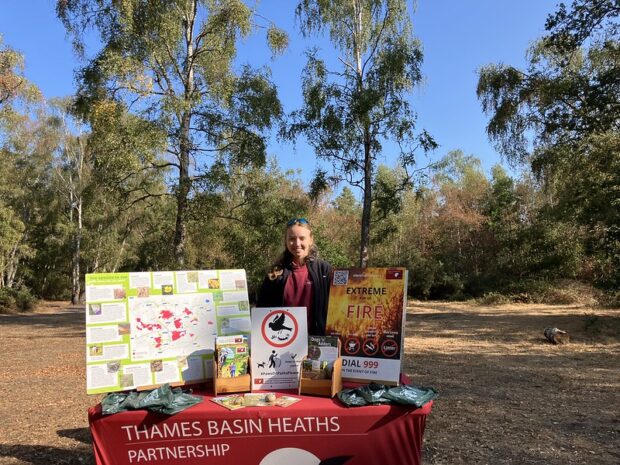
As part of this partnership, the SAMM team works towards this through monitoring, education and engagement activities that promote three core messages:
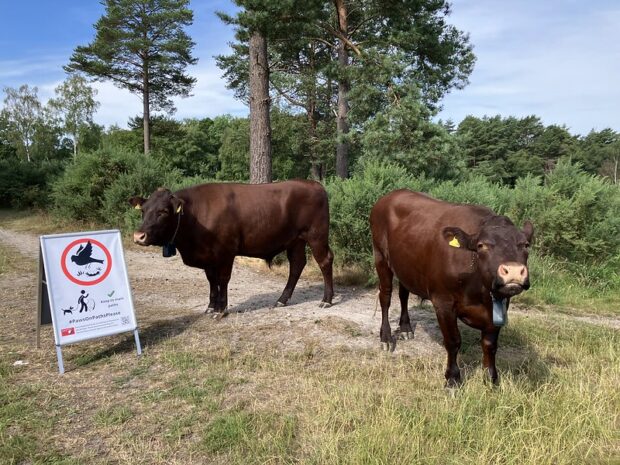
- Paws on paths please – to encourage responsible dog walking
- Make use of greenspace on your doorstep – discover new places to walk while helping to protect heathland wildlife
- Be Wildfire Aware – as the heathland is highly vulnerable to fire
Alongside SAMM, the partnership offer alternative places to walk and enjoy nature, reducing pressure on protected heathlands and helping balance nature conservation with development.
At Natural England, we are committed to building better places where nature and communities can coexist. We believe that nature and development go hand in hand, and that we should harness the power of nature as we face a changing climate.
The work done by the SAMM team directly supports these aims.
Asking the important question: how do we know we’re being effective?
Although reviewing and monitoring were built into the strategic solution from the outset, a formal evaluation of the SAMM Project had never been undertaken.
Discussions with Natural England colleagues and other projects that help reduce the environmental impacts of new development, at the annual National Mitigation Meet Ups, revealed a shared challenge: demonstrating the impact of behaviour change and preventative conservation work.
In 2024, funding was secured to commission an independent evaluation of the SAMM Project, gathering evidence, identifying improvements and helping to inform future delivery of the project.
The review focused on 4 key questions:
- Is the project delivering against its objectives?
- How effective are its services and roles?
- Is current monitoring sufficient to demonstrate impact?
- What changes are needed to sustain and enhance delivery?
Evaluation outcomes
We were delighted to find the evaluation showed the project is delivering on its core aims.
The headline finding though was that despite significant housing growth and increased visitor numbers across the area, protected bird populations have remained stable and in some cases increased; indicating that the project has successfully mitigated recreational impacts on the Thames Basin Heaths.
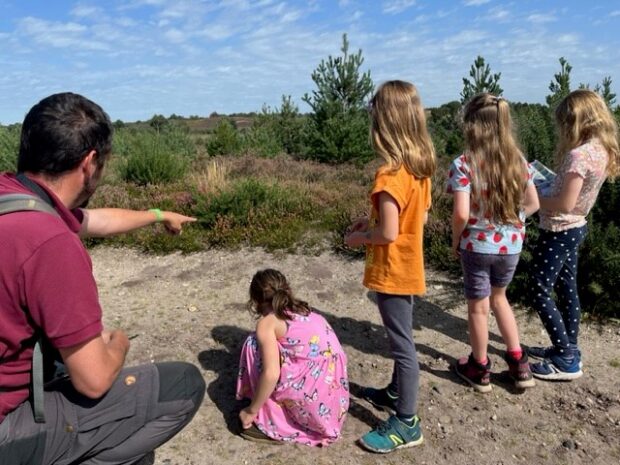
The report identifies our wardening, education and partnership work as key strengths of the project. These activities are at the heart of what we do, helping people enjoy the heathlands while understanding how to protect them. Through guided walks, public events, school visits and community outreach, we connect thousands of people with these special places every year.
The evaluation found that wardens are particularly effective at building trust with visitors through regular conversations, while the education programme has grown significantly in recent years. Together, these activities help build awareness, encourage responsible behaviour and inspire people to care for the Thames Basin Heaths.
Turning evidence into action
So far, we've been able to take the findings of this report and begin making some suggested improvements, including expanding our education capacity to meet the demand and making greater use of social media and other digital channels to reach new audiences.
We're also pleased to see the evaluation already generating interest beyond the partnership, with findings being shared and discussed by other teams working in mitigation and nature conservation.
We look forward to 15 more years of fantastic work protecting the Thames Basin Heaths.
Find out more
If you'd like to learn more, we encourage you to:
- Read the evaluation report
- Register for our webinar on Tuesday 29th September at 11:00am (which will dive deeper into our evaluation)
- Visit the Thames Basin Heaths Partnership website
- Contact us at tbhpartnership@naturalengland.org.uk
And if you're visiting your local heathland, please remember our three simple messages: stay on the path, be wildfire aware and help protect these special places for future generations.
You can also make a direct contribution by exploring our volunteering opportunities and getting involved in protecting the Thames Basin Heaths.
Finally, thank you to everyone who contributed to this work, including our partners, Joint Strategic Partnership Board members, Natural England colleagues, stakeholders and the wider SAMM team.
Together, we're building the evidence, partnerships and confidence needed to protect these internationally important heathlands while supporting thriving communities around them.
Recent Comments