By Tony Juniper, Chair of Natural England
In this blog, NE Chair Tony Juniper reflects on his recent visit to Pear Tree Park in Ealing with the Deputy Mayor Mete Coban to talk about the importance of green spaces for local communities and the amazing work that goes into creating and maintaining these spaces.
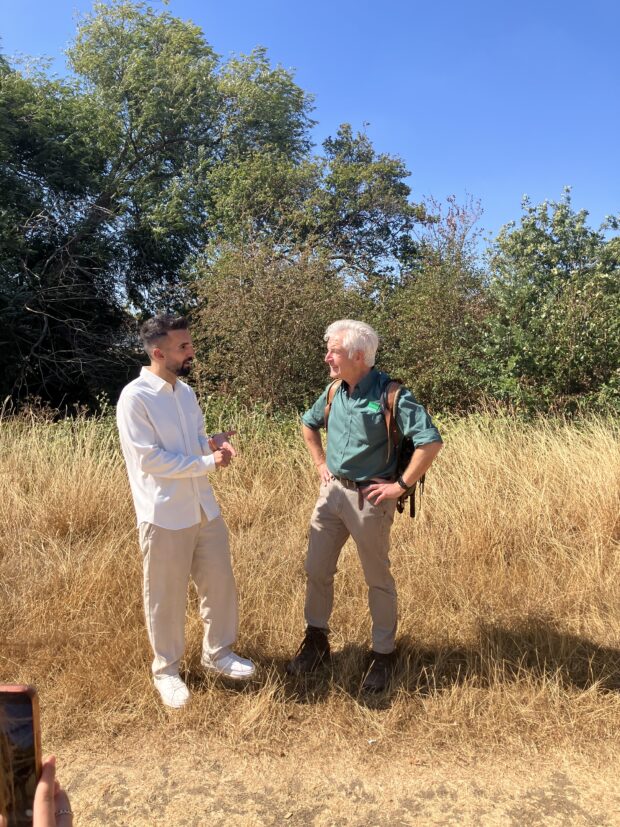
In late August I had the pleasure of visiting the Pear Tree Park rewilding project in Ealing, alongside London’s Deputy Mayor for Environment and Energy, Mete Çoban. It was inspiring to see how a place so close to the centre of London is being transformed for Nature, while also becoming a vital space for people — especially young people — to come together, learn new skills and build a deeper connection with the natural world.
West London Regional Park & Cultivate London
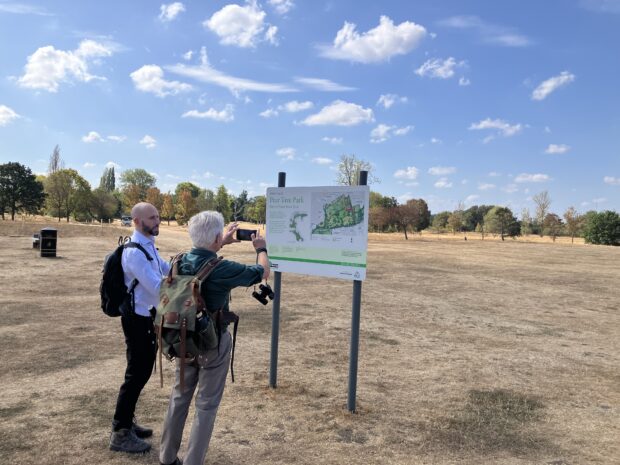
The day started with us meeting at Pear Tree Park, just a short bus trip from central Ealing, where we were introduced to the site by Sam Parry from Ealing Council. Previously a golf course, this park reopened two years ago and is now home to a mix of wildflower meadows, native trees and wetlands supporting pollinators and bird species. It is part of a wider ambition to create the West London Regional Park. This shared vision between Natural England, the Greater London Authority and other partners will connect green and blue spaces for communities across West London into one continuous landscape, supported by a Nature Towns and Cities grant.
Following this introduction we then heard from Cultivate London, an organisation working across the city to engage communities with urban gardening and offer opportunities to learn about and work in horticulture. They are particularly focussed on working with communities that face barriers to visiting green spaces, and speaking to their volunteers, we heard about not only the benefits they had created for Nature but also the positives this work had brought to their own health and wellbeing.
Tree planting with Letting Grow
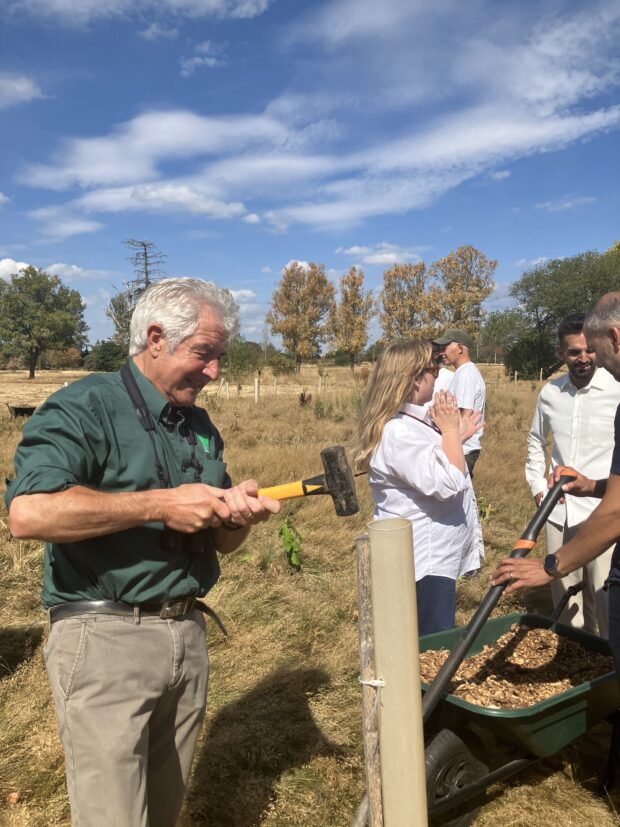
We then set out into the park to meet Ross Walker of Letting Grow, a London based charity that works with urban communities to create accessible green spaces. He and a group of young volunteers were busy planting tree saplings and Ross led us through a warm-up and activity, to ensure everyone felt welcome in this natural space, before we all got stuck in with the tree planting.
It was especially heartening to work alongside young people who had chosen to spend part of their summer holidays caring for a local green space that clearly means a great deal to them. Together they had already planted more than 5,000 trees across the park, contributing to the borough’s wider target of 50,000.
What the evidence tells us
The visit also illustrated why access to nature is such an important issue for cities like London. The latest People and Nature Survey for England Annual Report found that people living in urban or socio-economically deprived areas, younger adults, and people identifying as Asian or Asian British are among those most likely to report not having a local green space within easy walking distance. These findings underline why improving access to high-quality green space is not simply an environmental issue, but a matter of fairness, health and opportunity.
The evidence also shows that people feel more connected to nature when green spaces are within a five-minute walk of home. Yet fewer than half of adults reported feeling connected to Nature, even though most people agree that being in nature makes them happy and supports their physical and mental wellbeing.
These findings reinforce something that Natural England has long championed: nature should be part of people's everyday lives, not something they have to travel to experience. Places like Pear Tree Park demonstrate what can be achieved when partners work together to bring high-quality green spaces closer to communities, helping to tackle inequalities in access.
Restoring nature along the River Brent
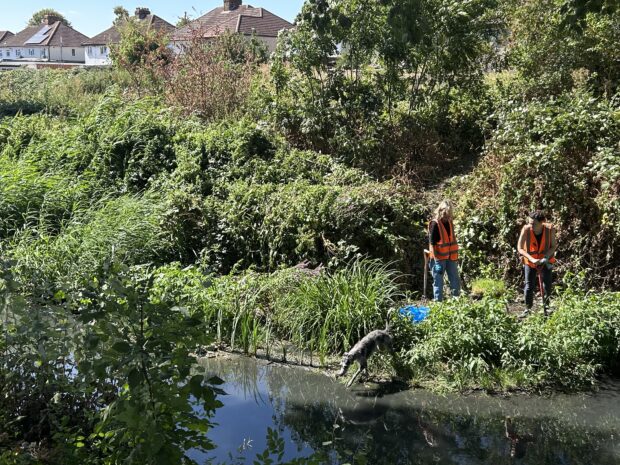
Our final stop took us to the River Brent, where we met representatives from Clean Up the River Brent, a community river cleaning group, and local volunteers helping to improve and protect this important waterway by clearing invasive species, such as Himalayan Balsam, and replacing with native wetland plants such as reeds and rushes. It also meant cleaning out rubbish from the river, the biggest catch of the day being two e-bikes which we were glad to see removed.
This visit was a powerful reminder that connecting people with nature is not only good for individuals, but it is essential for long-term nature recovery. When communities are involved in shaping and caring for local green and blue spaces, they become active stewards of the natural environment.
Resilient cities and communities
As well as supporting biodiversity and wellbeing, projects like Pear Tree Park play an increasingly important role in helping cities like London adapt to climate change. Trees, parks, and healthy waterways can help reduce flood risk, improve air quality and provide cooling during periods of extreme heat, like the capital has experienced this summer. Therefore, investing in nature is investing in healthier, more resilient communities.
I left Pear Tree Park feeling optimistic. The partnership between communities, organisations and Ealing Council shows what can be achieved when people come together around a shared ambition for nature.
As plans for the West London Regional Park develop, and initiatives such as Nature Towns and Cities gather momentum, places like Pear Tree Park offer a glimpse of a greener urban future — one where Nature recovery, community wellbeing and climate resilience are advanced together, for the benefit of generations to come.
Read the new People and Nature Survey Annual Report: Adults' Year 6 Annual Report (April 2025 - March 2026) - GOV.UK
Find out more about Nature Towns and Cities: Home - Nature Towns and Cities
Leave a comment