By Tony Juniper, Chair of Natural England
In this blog, Natural England’s chair reflects on a recent site visit to a Suffolk port, from where he sailed out to see an offshore wind farm as well as a novel installation to help one of the North Sea’s iconic species. Here where industry and wildlife must coexist in a rapidly changing environment, positive opportunities for nature can still be achieved alongside achieving UK energy security, provided regulators and developers work closely together towards a mutual goal of ‘low carbon, high nature’ development.
The North Sea is one of the busiest and most pressured areas of ocean in the world. Surrounded by a number of developed countries it has for centuries been subject to fishing pressures, the effects of land-based pollution, infrastructure development and now climate change.
The flip side of those pressures are a series of benefits which have sustained many of England’s communities for a correspondingly long time, ranging from trade, food, construction materials and energy supplies. In modern times the big question is how to sustain that flow of benefits while protecting and restoring the health of that marine system, including its huge range of coastal and marine wildlife. Key to finding answers is good planning and collaborative working, and not least in relation to fast-growing demand for clean electricity.
The UK is now embarked on a clean power revolution. It needs to move at speed and at scale, so that we can play our part in getting to zero carbon emissions by mid-century, and ideally sooner if we possibly can. This is going to require investment, infrastructure, skills, complex supply chains, logistics and joined-up delivery.
Nowhere is this combination more evident than at the port like Lowestoft. Recently a declining fishing port town on the Suffolk coast, it is now at the forefront of the offshore energy revolution. The port itself, owned by Associated British Ports (ABP), has recently expanded with the £35 million of investment to create the Eastern Energy Facility (LEEF): an increasingly vital hub for enabling both the construction and ongoing maintenance of offshore windfarms, such as the four East Anglia installations in operation or under construction by ScottishPower Renewables (SPR).
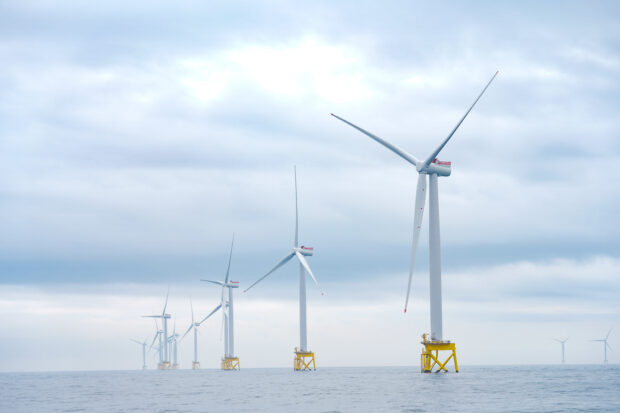
Natural England is working with these developers and many others to help ensure that infrastructure such as new port developments and offshore windfarms can progress, generating with it local jobs and opportunity, whilst at the same time protecting wildlife while giving the space it needs to adapt to in a fast-changing world.
Offshore wind is an absolutely critical component of the Government's aim to decarbonise the energy sector by 2030. This forms part of the Government's Clean Power 2030 Action Plan which recognises the need to integrate clean power and the natural environment to tackle the climate and Nature crises. Similarly, in Natural England’s new Strategy, we set out how recovering Nature will be a vital pillar to help deliver the infrastructure that the country needs - and that includes our precious marine environment.
Protecting marine life
I visited Lowestoft to hear directly from ABP and SPR about their work, and how we at Natural England can help them do it while looking after our precious marine environment.
Fraser Murdoch, Head of Consent Compliance at ScottishPower Renewables, said:
“Our East Anglia projects aren’t just about delivering more vital clean, green electricity – they also mean billions of pounds in investment to support thousands of jobs and hundreds of companies across the supply chain, boosting energy security and helping deliver the energy transition.
“We pride ourselves on working responsibly, and sensitively and fostering open dialogue with stakeholders like Natural England, from the very earliest stages of project development through to construction, operation and beyond. All that ensures that windfarms and wildlife can happily co-exist - so we can all benefit from a cleaner and greener future.”
As we headed out on a port pilot's vessel from the calm waters of the port into the choppier seas offshore, I thought about how challenging the construction of ever-larger windfarms - sometimes hundreds of square kilometres in size – must be. The scale of the engineering is mind-boggling, requiring purpose-built specialised ports to deliver turbine pieces, construction materials and personnel out to one of the hardest working environments on the earth.
Ports are recognised as a foundational industry and invest significantly to facilitate supporting the Government’s mission in making the UK a green energy superpower. LEEF provides exceptional demonstration of investment in state-of-the-art port infrastructure delivering deep water berths, operational storage space and additionally is future proofed to support alternative fuels and shore-power.
Supporting seabirds
As this complex logistical task has been planned, developers have also taken on the goals for the protection of the natural environment. One major challenge here, as it is elsewhere, is the impact on seabirds. Developers have invested with Natural England advice into a range of initiatives, including the removal of rodents from offshore islands that host seabird breeding colonies. By removing rats from these places, which take eggs and chicks of birds, some significant ecological benefit can be secured, helping to address potential impacts associated with offshore wind development. Another measure being deployed is the construction of artificial nesting structures.
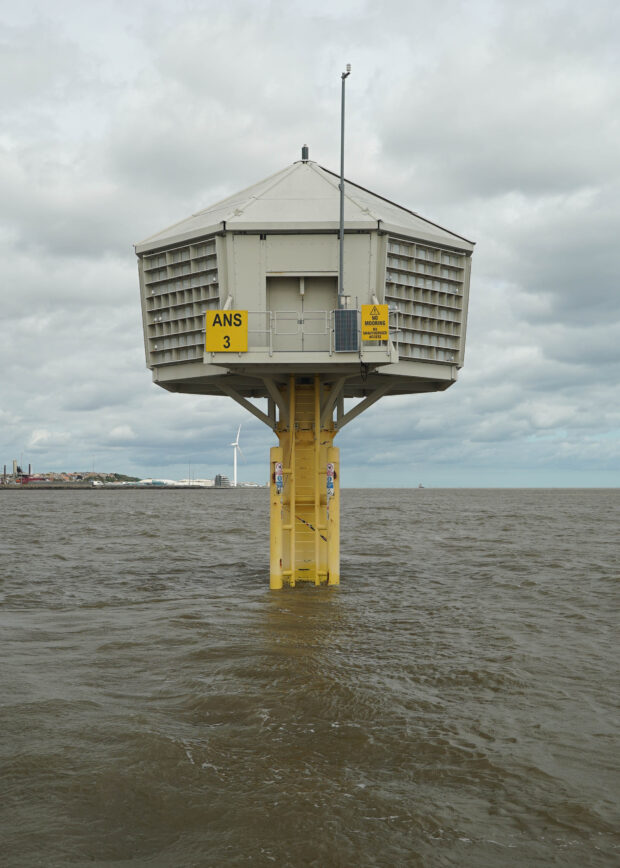
The kittiwake is a graceful pelagic gull and is now a bird of global conservation concern, having experienced significant declines in recent decades. This species specialises in feeding on sand eels, a silvery shoaling fish that is struggling to survive in a warmer North Sea. Offshore windfarms are an important element of tackling those warming seas but also have the potential to result in impacts on kittiwake should birds collide with the turning blades. Ironically, some kittiwakes have found unlikely homes on oil and gas structures. As these ageing structures are decommissioned over the coming years, this means a potential shortage of nesting habitat for the species, putting pressure on other colonies.
This is where offshore wind developers such as SPR, RWE and Ørsted come in, all of whom have installed nesting structures on the quayside or a short distance offshore to provide additional nesting spaces. These may also reduce the pressure on coastal towns like Lowestoft, where, despite being loved by many residents, nesting kittiwakes are not always the easiest (or quietest!) of neighbours. It’s early days for these innovative schemes, but the nearshore structures installed by Ørsted have already attracted nesting pairs, and it was uplifting to see a few nests amongst the decoys placed to attract birds in.
Benj Sykes, UK Chair, Ørsted, said:
"Delivering clean power at the scale the UK requires will depend on strong partnerships between industry, government and nature conservation organisations. Working with Natural England and others, initiatives such as our Artificial Nesting Structures show how collaboration and innovation can support nature recovery alongside the responsible growth of offshore wind."
Those first pairs and their young may be far out in the north Atlantic by now, facing even more challenging conditions than those faced by developers.
In parallel with this step, Natural England's advice has separately led to the closure of the North Sea sand eel fishery. This will be of great importance to birds - including kittiwakes, puffins, guillemots and gannets - while also helping the recovery of commercial fish species, such as cod and whiting, which also eat them.
Nature recovery
Returning to port, I mused on the progress being made but also the considerable challenges that remain in managing the vast but increasingly busy marine environment to ensure its benefits continue to flow. As our demands on the sea space increases, there is a pressing need for spatial planning in the marine environment that brings interested parties and the latest environmental evidence together to make the complex decisions about what should go where, and which activities are compatible with each other – including nature recovery. To assist those conversations, Natural England’s ground-breaking Poseidon project is generating the evidence needed to help identify the least environmentally sensitive locations for offshore windfarms, factoring in our seabed habitats, marine mammals as well as our seabird populations.
Collaboration is key
We are also working with Defra and other stakeholders to make it easier for developers to deliver environmental compensation measures for their unavoidable impacts, through the Marine Recovery Fund which will deliver strategic, targeted environmental improvements on their behalf. We also hope our Rescue project will make a major contribution to reducing collision impacts by developing a more precise understanding of seabird flight heights, reducing the need for compensation in the first place. Industry is already innovating by engineering structures with blades higher off the sea surface, and Natural England will be providing world-class scientific evidence to assist those designs.
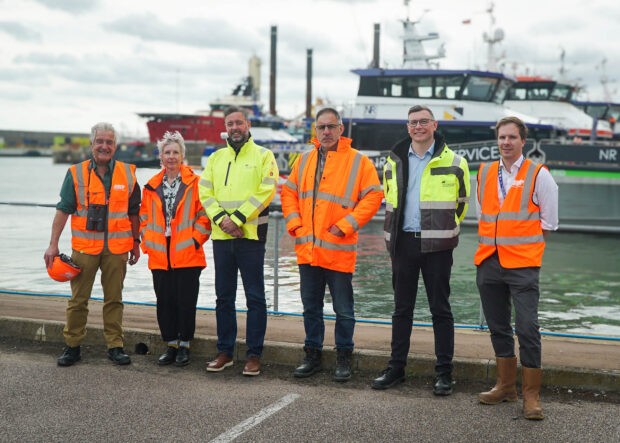
All this activity is hard-wired into Natural England’s Approach to Offshore Wind, which we intend to update and improve in the coming months, to ensure we are doing as much as we can to help progress ‘low carbon, high nature’ developments.
Tim Morris, Group Head of Corporate Communications for Associated British Ports (ABP) said:
“The Port has been transformed into a leading hub for offshore energy in the Southern North Sea, delivering hundreds of high quality jobs for Lowestoft and the surrounding area as well as supporting energy security and sustainable resilience for the UK as a whole. ABP is committed to developing its ports in ways that deliver both for economic growth and nature. We’re demonstrating that ports can deliver regional prosperity while restoring habitats and improving biodiversity. Partnership drives better outcomes. Regional growth and nature recovery succeed fastest when business and regulators work side‑by‑side, sharing evidence, expertise and long‑term goals.”
As I departed Lowestoft, I was reminded of the social context for all of this. This is England's most easterly town and has always relied on the sea for its economic wellbeing, yet during recent times has, like the huge fish stocks that once sustained it, been in decline. Today Lowestoft has high levels of social deprivation and is in urgent need of regeneration. The offshore wind industry and its associated port modernisation is an important source of that, already bringing billions of pounds of investment through the town, creating hundreds of good jobs and bringing indirect benefits via hotels, restaurants, pubs, taxis and more. It is this that drives our work at Natural England, seeking to recover Nature for growth, health and security.
There is still much for us all to do, but I left Lowestoft convinced that there was a sustainable future for the North Sea, its communities and wildlife, provided we work together to achieve it.
Leave a comment